FREE Grade 1 (Ages 6–7) 🎯 CCSS Grade 1 / UK KS1 🇬🇧 UK: Year 1 (KS1) 🖨️ Tested for US Letter & A4 · Portrait
Sorting Colors 3 Worksheet for Grade 1
Sorting Colors 3 is a printable PDF worksheet for Grade 1 (Activities › Seasonal Arts). It belongs to the Sorting Colors set and gives children one focused page of practice they can complete with a pencil, crayons, or a marker.
✏️ Practice On-Screen Download PDF Print ✨ Create Similar with AI
Resize & download
👨🏫 Parent Teaching Guide & Interactive Answer Key
Step-by-step solutions, parent teaching script, common pitfalls, and print grading rubric for Grade 1 Sorting Colors 3.
“Read the instructions together first. What is the worksheet asking us to find? Let's do the first one together as a team, then you try the next one on your own!”
Skimming past the instructions and guessing what to do. Always read the prompt heading aloud.
⏱️ 3-Minute Structured Home Teaching Plan:
Why Physical Pencil Writing Builds Stronger Neural Pathways
Preview this worksheet
✍️ Draw, Trace & Practice On-Screen
Inside this PDF
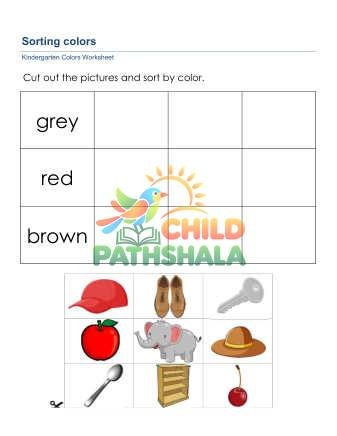
This is a single-page printable — what you see in the thumbnail is the whole sheet. Words and themes pulled straight from the file include:
sortingkindergartenpicturessortgreybrown
Sample exercises from this page
- Sorting colors
- Kindergarten Colors Worksheet
- Cut out the pictures and sort by color.
- grey
- red
- brown
Watch: Pattern Sheets in action
▶ Now playing: Pattern Sheets
📺 Dedicated Watch Page →File details & curriculum alignment
Worksheet overview & learning goals
Teachers, this one is centre-friendly: Sorting Colors 3 runs itself once you have modeled the first line, making it ideal for Grade 1 Activities rotations drawn from the Sorting Colors collection. The Seasonal Arts layout is calm and uncluttered, so even easily distracted learners settle into the work.
On this page, children work through Sorting Colors activities framed as Seasonal Arts practice. The difficulty sits at the Easy band for Grade 1 (ages 6–7), which means most children can attempt it independently after one guided example. That independence is the point: self-started pages build homework confidence faster than heavily assisted ones.
Still deciding whether to print? Open the preview and check the first row against what your child did in school this week. If it matches, print two copies — one for today, one for Friday — and watch familiarity turn into fluency before the weekend.
- Strengthen fine motor control: grip, pressure, and staying inside lines
- Reinforce classroom Activities lessons with take-home Sorting Colors practice
- Grow focus and patience with a satisfying finish-the-page challenge
- Give Grade 1 learners a visible win in under fifteen focused minutes
- Develop visual discrimination: shapes, boundaries, and patterns
- Build test readiness through calm, low-stakes Seasonal Arts repetition
Included in a printable bundle
This page is part of the Sorting Colors bundle, a 4-page printable pack covering Sorting Colors for Grade 1. Single pages are perfect for tonight; the full pack is what you want for the week — download the whole bundle as one ZIP below and you will never scramble for tomorrow's practice again. You are looking at page 3 of 4 in this pack — it follows Sorting Colors 2 and leads into Sorting Colors 4, so the difficulty steps up gradually. Working the pack in order gives the smoothest progression, though every page also stands alone.
Download full 4-page bundle (ZIP) See all pages in Sorting Colors
Also in this bundle
Sorting Colors 1Sorting Colors 2Sorting Colors 4
Curriculum & skill alignment
Think of this Seasonal Arts page as independent quiet time in printable form — fifteen minutes where a Grade 1 child is happily occupied, building skills, and asking for nothing. That makes it gold for waiting rooms, restaurant tables, airplane seats, and the witching hour before dinner. Pack a zip pouch with the printed sheet plus eight crayons (limiting choices paradoxically boosts creativity) and you carry calm in your bag. Finished pages earn a second life: date them and gift them to grandparents, who treasure ages 6–7 artwork above all else, or photograph them into a digital gallery before recycling the paper. Rotate the medium to rotate the workout — markers for bold confidence, colored pencils for careful control, watercolors for glorious mess on a protected table. At the Easy stage, the deepest value is not the coloring itself but the sustained, self-directed focus it rehearses, a capacity every future subject will draw upon daily.
A second set of Easy-band wins to watch for: writing their own first name without a model, counting to twenty with one-to-one pointing, and retelling the steps of a finished Seasonal Arts page in order. Daily rhythms matter enormously now — same practice time, same spot, same pencil — because predictability frees working memory for learning. Expect big day-to-day swings; a tired five-year-old is a different learner than a rested one, and pushing through fatigue teaches nothing but dislike. Instead, bank the good days: when focus is high, do the page plus one sibling sorting colors variant back to back. Keep language playful and concrete, celebrate process over product, and trust that these small Grade 1 routines are laying rails that later schooling will run on smoothly.
Step-by-step parent & teacher guide
Print one copy per child, plus one extra for yourself so you can model the first two answers. Keep the session to ten or fifteen minutes, praise specific effort rather than speed, and end while the experience is still positive — you can always print a sibling variant tomorrow.
- Print at 100 percent scale on Letter or A4 and keep one spare copy ready — retries happen the moment a page starts going well.
- Model the first items: do the opening two together, thinking aloud as you go. Hearing an adult reason through sorting colors work teaches the method, not just the answer.
- Read the instructions aloud once together, then have your child re-read them silently before starting; the double pass prevents half the usual 'what do I do?' interruptions.
- Close the loop the same day: review the dotted items together, let your child fix them personally, and choose tomorrow's sibling page on the spot. Same-day review converts practice into memory.
Recommended supplies
Skip the fancy supplies. One printed page, one pencil, one eraser — that is the entire kit. Children at the Easy stage do their best work when the materials are boring and the task is clear.
Extension activities
- Error hunt game: you complete a sibling page with three sneaky mistakes planted, and your child plays teacher with a red pencil. Detecting errors in Activities work builds sharper self-checking than perfect practice ever could.
- Colour-code review: circle the easiest answer in green and the trickiest in orange, then ask why the orange one felt harder. The explanation is the real lesson hiding inside the page.
- Speed round: once accuracy is solid, replay the trickiest row with a gentle timer and celebrate a personal best — fluency grows when accuracy is already in place.
- Buddy system: pair up with a sibling or friend on the same Sorting Colors page and compare strategies afterward, not just answers. Explaining different routes to the same answer deepens Easy thinking enormously.
5 Steps to Skill Mastery for this Topic
Find exact learning gaps before practicing.
Screen-free pencil-on-paper completion.
Stuck on an item? Generate 3 mirror practice sheets.
Reinforce recall with interactive games.
Record mastery and print a diploma certificate.
Where to Go Next: 3-Tier Learning Ladder
Choose the best next step tailored to how your child performed on today’s worksheet:
Sorting Colors 1
Grade-1Rebuilds confidence with gentler foundational numbers and visual cues.
Sorting Colors 2
Grade-1Parallel sibling practice to lock in muscle memory without memorization.

Color Spell Words
Grade-2Advances to multi-step reasoning, higher numbers, or next grade level.
Keep practicing
Frequently asked questions
Is this seasonal arts worksheet free for classroom use?
Yes — printing for a full class, a co-op, or a tutor's caseload is exactly what this library is for. Preview the page first so you know what every student will receive, then print the class set in one run. If you plan a whole unit around the Sorting Colors topic, the bundle ZIP gets you every sibling variant in a single download, which keeps week-two and week-three printing just as easy as today's.
How do I print this PDF without dark borders or cut-off edges?
Three quick habits make classroom printing painless: test one copy before the full set, set the copier to single-sided so nothing peeks through, and keep a master folder of downloaded PDFs so you never re-search for a page you already used. For this Seasonal Arts sheet specifically, normal print settings are fine — the design tolerates both laser and inkjet without losing legibility.
What age group is this printable best suited for?
A quick readiness check settles it: hand the child the page and watch the first row without helping. Smooth and confident means independent practice; hesitation means work the first two items together and then step back; total stall means swap in an easier sibling variant from the same bundle this week and revisit this one after a confidence-building page. The curriculum section above lists every Sorting Colors the page touches, so you can match it to what your class or child is covering this month rather than guessing.
What skills does this Grade 1 worksheet build?
In report-card language, this page supports Seasonal Arts proficiency plus work-habit goals like task completion and independent practice — phrases teachers and parents both use at conference time. Mention the specific wins you observed: finished without reminders, self-corrected an error, or explained an answer aloud. Those observations become powerful portfolio notes and concrete praise that beats generic good job stickers. Because the Sorting Colors collection spans many variants, you can document progress across weeks with dated finished pages as evidence. Bring two or three to the next parent-teacher meeting and the conversation shifts from vague worries to a visible growth story told in your child's own handwriting.
The fastest route to a Seasonal Arts win this week is already on your screen: preview Sorting Colors 3, print it, and let your child finish it unaided. When they ask for another, the bundle is one click away.