FREE Grade 1 (Ages 6–7) 🎯 CCSS Grade 1 / UK KS1 🇬🇧 UK: Year 1 (KS1) 🖨️ Tested for US Letter & A4 · Portrait
Beginning Consonants Letter P Worksheet for Grade 1
Beginning Consonants Letter P is a printable PDF worksheet for Grade 1 (ELA › Phonics). It belongs to the Beginning Consonants Letter P set and gives children one focused page of practice they can complete with a pencil, crayons, or a marker.
✏️ Practice On-Screen Download PDF Print ✨ Create Similar with AI
Resize & download
👨🏫 Parent Teaching Guide & Interactive Answer Key
Step-by-step solutions, parent teaching script, common pitfalls, and print grading rubric for Grade 1 Beginning Consonants Letter P.
“Let's tap each sound on our fingers: /c/ ... /a/ ... /t/. Now slide your finger along the word to blend the sounds together smoothly: cat! What word did we read?”
Adding an extra 'uh' sound to consonants (saying 'buh' instead of crisp /b/). Keep consonant sounds quick and clipped.
⏱️ 3-Minute Structured Home Teaching Plan:
Why Physical Pencil Writing Builds Stronger Neural Pathways
Preview this worksheet
✍️ Draw, Trace & Practice On-Screen
Inside this PDF
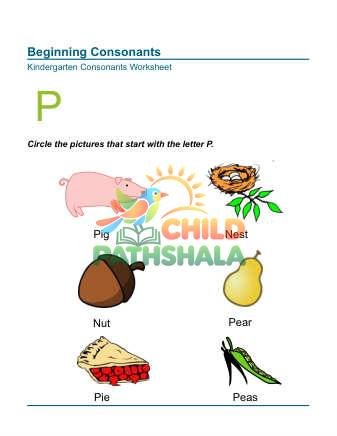
This is a single-page printable — what you see in the thumbnail is the whole sheet. Words and themes pulled straight from the file include:
beginningconsonantskindergartencirclepicturesstartletternestpearpeas
Sample exercises from this page
- Beginning Consonants
- Kindergarten Consonants Worksheet
- Circle the pictures that start with the letter P.
- Pig
- Nest
- Pear
- Pie
- Peas
- Nut
Watch: Alphabet Flashcards in action
▶ Now playing: Alphabet Flashcards
📺 Dedicated Watch Page →File details & curriculum alignment
Worksheet overview & learning goals
This Grade 1 Phonics page, Beginning Consonants Letter P, belongs to the Beginning Consonants Letter P collection in ELA. It is built for real life: one page, zero prep, free preview, and print-ready output that looks crisp on both home printers and school copiers.
Wondering if the level fits? Grade 1 (ages 6–7) is the sweet spot, and the Easy band means the page challenges without crushing. If your child stalls on item three, do it together and release the rest — that gradual handover is exactly how Phonics confidence is built.
This page works anywhere a printer lives: classrooms, homeschool tables, tutoring sessions, libraries, and travel binders. Because it is self-contained, no answer key hunt or extra materials are needed — learning starts the moment the page lands on the desk.
- Reinforce classroom ELA lessons with take-home Beginning Consonants Letter P practice
- Strengthen core literacy with short, success-sized practice
- Support mixed-ability groups — fast finishers simply move on to sibling pages
- Encourage independent work habits with clear instructions
- Build test readiness through calm, low-stakes Phonics repetition
- Track progress by repeating the skill with new variants
Included in a printable bundle
This page is part of the Beginning Consonants Letter P bundle, a 1-page printable pack covering Beginning Consonants Letter P for Grade 1. Single pages are perfect for tonight; the full pack is what you want for the week — download the whole bundle as one ZIP below and you will never scramble for tomorrow's practice again. You are looking at page 1 of 1 in this pack. Working the pack in order gives the smoothest progression, though every page also stands alone.
Download full 1-page bundle (ZIP) See all pages in Beginning Consonants Letter P
Curriculum & skill alignment
This Grade 1 English printable practices Phonics through the Beginning Consonants Letter P set, packaging one clear literacy skill into a single satisfying page. At the Easy stage, children learn to read and write by doing — sounding out, tracing, circling, and writing in short bursts that respect young attention spans while still delivering real repetition. The instructions use simple, consistent language so the page works independently after the first guided run-through, which is exactly what builds homework confidence. Picture support carries meaning for emerging readers, while the clean, uncluttered layout keeps working memory free for the actual learning task instead of decoding the worksheet itself. Teachers slot sheets like this into literacy centers, morning work, and small-group intervention, and parents can use the identical page at home for seamless school-to-home reinforcement. Because the Phonics skill appears in several variants across the bundle, families can revisit the same learning goal with a fresh page each time — the proven recipe for moving a skill from shaky to solid.
At the Easy band (Grade 1, ages 6–7), the developmental milestones that matter most are pencil grip, following one- and two-step directions, and sustaining focus for ten to fifteen minutes. Children this age learn through their hands, so every traced line, circled answer, and colored shape is literally wiring the brain for later academic work. Expect wobbles: letter sizes will vary, answers will drift off baselines, and attention will wander mid-page. All of that is normal and healthy. The right response is shorter sessions, warmer praise for effort, and immediate repetition of anything that clicked — this page plus one sibling variant tomorrow will do more good than any lecture about trying harder. Watch for the milestone moments: the first fully independent row, the first self-caught mistake, the first request for another page. Each one signals readiness for slightly longer, slightly harder Phonics work.
Step-by-step parent & teacher guide
Everything on this page is self-contained, so preparation is just printing. If your child tends to rush, fold the sheet so only one row shows at a time; if they tend to stall, do the first item with them and set a friendly timer for the rest.
- Model the first items: do the opening two together, thinking aloud as you go. Hearing an adult reason through beginning consonants letter p work teaches the method, not just the answer.
- Do a guided start: complete the first three items as a team, with your child holding the pencil and you asking guiding questions about each beginning consonants letter p decision. Then announce the handover clearly — kids rise to explicit independence.
- Narrate the thinking: ask your child to say each step out loud before writing it. Spoken reasoning catches slips before they reach the page.
- Set up for success: clear a small workspace, lay out the printed page with a sharp pencil, and silence nearby screens. Two minutes of setup prevents twenty minutes of drifting attention.
Recommended supplies
Colored pencils beat markers for detail work on this page — they sharpen fine motor control and never bleed. Keep a handheld sharpener beside the practice spot; the sharpening pause doubles as a natural thinking break.
Extension activities
- Real-world mission: send your child to spot Phonics ideas in the wild — numbers on signs, letters on packaging, patterns on tiles. Photograph three finds and tape them beside the worksheet.
- Error hunt game: you complete a sibling page with three sneaky mistakes planted, and your child plays teacher with a red pencil. Detecting errors in ELA work builds sharper self-checking than perfect practice ever could.
- Colour-code review: circle the easiest answer in green and the trickiest in orange, then ask why the orange one felt harder. The explanation is the real lesson hiding inside the page.
- Speed round: once accuracy is solid, replay the trickiest row with a gentle timer and celebrate a personal best — fluency grows when accuracy is already in place.
5 Steps to Skill Mastery for this Topic
Find exact learning gaps before practicing.
Screen-free pencil-on-paper completion.
Stuck on an item? Generate 3 mirror practice sheets.
Reinforce recall with interactive games.
Record mastery and print a diploma certificate.
Where to Go Next: 3-Tier Learning Ladder
Choose the best next step tailored to how your child performed on today’s worksheet:

Phonics Flashcards A
Grade-1Parallel sibling practice to lock in muscle memory without memorization.

Alphabetical Order 6
Grade-2Advances to multi-step reasoning, higher numbers, or next grade level.
Keep practicing
Frequently asked questions
Is this phonics worksheet free for classroom use?
Yes — printing for a full class, a co-op, or a tutor's caseload is exactly what this library is for. Preview the page first so you know what every student will receive, then print the class set in one run. If you plan a whole unit around the Beginning Consonants Letter P topic, the bundle ZIP gets you every sibling variant in a single download, which keeps week-two and week-three printing just as easy as today's.
How do I print this PDF without dark borders or cut-off edges?
School copiers behave differently from home printers: choose single-sided, normal contrast, and 100 percent scale for the cleanest class sets. If your copier darkens backgrounds, lighten the copy density one notch — the bold Phonics lines stay crisp while gray wash disappears. Printing from a phone or tablet works fine through any PDF reader; just confirm US Letter or A4 in the print preview first. For laminated reuse, print once on cardstock, slip the sheet into a dry-erase pocket, and hand out whiteboard markers — one print serves the whole term. Whatever the machine, always run a single test copy before committing to thirty.
What age group is this printable best suited for?
A quick readiness check settles it: hand the child the page and watch the first row without helping. Smooth and confident means independent practice; hesitation means work the first two items together and then step back; total stall means swap in an easier sibling variant from the same bundle this week and revisit this one after a confidence-building page. The curriculum section above lists every Beginning Consonants Letter P the page touches, so you can match it to what your class or child is covering this month rather than guessing.
What skills does this Grade 1 worksheet build?
If the first session felt smooth, extend it the following week by asking your child to predict which items will be easy before starting — metacognition like that multiplies the value of routine practice. If the session felt like a struggle, shrink the goal: cover all but one row with a sheet of paper and let the child 'unlock' rows one at a time. Either way, log the date on the finished page; dated pages from the Beginning Consonants Letter P bundle become a progress story you can actually show.
One page today, a confident learner tomorrow. Preview Beginning Consonants Letter P free above, print it in seconds, and keep the Beginning Consonants Letter P bundle bookmarked for the rest of the week. Bookmark the bundle page so tomorrow's print is one click away.