Home › Blog › Parents & Teachers › What Parents Should Not Expect From Preschool Children: Deve
What Parents Should Not Expect From Preschool Children: Development Realities, Attention Spans, and Emotional Horizons
Preschool children (ages 3 to 5) exist in a unique developmental window characterized by rapid neural growth, sensory-motor exploration, and pre-operational logic.


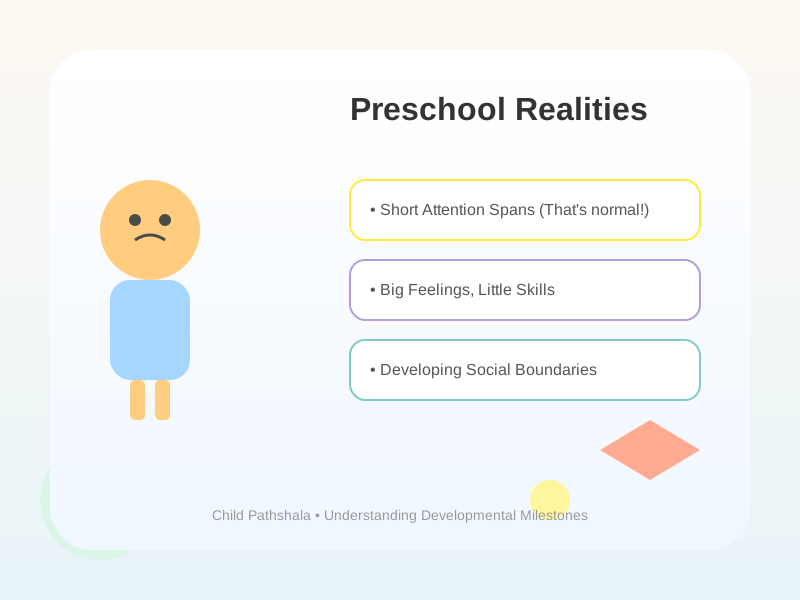
Preschool children (ages 3 to 5) exist in a unique developmental window characterized by rapid neural growth, sensory-motor exploration, and pre-operational logic. Expecting preschoolers to sit motionless for long periods, write neatly between narrow lined margins, or control intense emotional impulses without adult support defies neurodevelopmental biology.
Understanding biological developmental ceilings and aligning expectations with age-appropriate milestones nurtures joyful, confident early learners.


1. The Preschool Developmental Reality Continuum
THE PRESCHOOL NEURODEVELOPMENTAL HORIZON
| 1. PHYSICAL / GRAPHOMOTOR REALITY | | 2. ATTENTION & COGNITIVE REALITY |
| - Unossified wrist cartilage bones | + | - 6 to 15 minutes max sustained focus |
| 3. EMOTIONAL REGULATION REALITY | | 4. PLAY-BASED LEARNING ENGINE |
| - Developing prefrontal cortex | + | - Gross-motor movement is cognitive |
| - Requires adult co-regulation | | - Loose parts build spatial logic |
When setting up our home study corner, we set out a full box of 48 crayons. Within five minutes, thirty-six crayons were rolling across the floor and our preschooler was overwhelmed. Now, before any activity, we place exactly three crayons on the wooden tray. A clear desk creates a calm, focused mind.
2. What NOT to Expect from Preschoolers vs. Developmental Reality
| Unrealistic Parental Expectation | Biological Reason It Fails | Realistic Developmental Reality |
|---|---|---|
| Sitting still for 30+ minutes | Vestibular system requires physical movement to calibrate balance and focus | Focuses for 8 to 15 minutes during interactive, hands-on tasks. |
| Writing small, neat letters | Hand carpals are soft cartilage; fine motor finger control is emerging | Makes large arm strokes in sensory sand, shaving cream, and large paper. |
| Sharing toys without conflict | Theory of Mind is emerging; egocentric thinking is normal at ages 3-4 | Practices guided turn-taking with visual sand timers and adult mediation. |
| Silent independent study | Self-talk (private speech) is how young brains regulate thought and action | Talks aloud, hums, and narrates actions while solving puzzles or building. |
| Flawless emotional control | Amygdala reacts quickly while prefrontal inhibitory pathways are immature | Expresses big emotions physically; needs calm adult co-regulation. |
3. The Science of Hand Bone Ossification in Early Childhood
HAND X-RAY DEVELOPMENT: Cartilage vs. Solid Bone
- Age 3-4: The wrist contains large gaps of soft, pliable cartilage; carpals are not fused.
- Impact of Forcing Pencils: Causes muscle cramping, improper grip deformation, and writing fatigue.
- Best Practice: Strengthen hands with playdough, clay, child scissors, and large chalk before paper writing.
4. Age-Appropriate Daily Preschool Rhythm
HEALTHY PRESCHOOL DAILY SCHEDULE (HOMES & EARLY CENTERS)
- 70% Unstructured Active Play: Sandboxes, water pouring, building blocks, outdoor running.
- 15% Shared Storybook & Language: Picture book read-alouds, nursery rhymes, singing.
- 15% Practical Life & Sensory Exploration: Chopping bananas, sorting buttons, nature walks.
- 0% Forced Desk Worksheets: Replace paper drills with tangible physical objects!
5. Preschool Expectation Diagnostic Checklist
- Movement Freedom: Does your daily routine allow at least 90 minutes of active physical movement?
- Sensory Mediums: Are letters and numbers introduced through tactile materials rather than paper pencils?
- Emotional Patience: Do you view tantrums as cries for co-regulation rather than willful defiance?
6. Key Takeaways
- Honor Biological Timelines: Preschoolers learn best through movement and sensory play.
- Protect Soft Hands: Build finger strength with clay and tongs before enforcing pencil writing.
- Co-Regulate Emotions: Young children need adult warmth to help soothe big feelings.
Age-Appropriate Developmental Support Protocols
- Gross Motor Precedes Fine Motor: Prioritize crawling, climbing, and shoulder stability exercises before introducing pencil grips.
- Sensory Processing Enrichment: Offer water play, clay manipulation, and sandbox digging to stimulate tactile proprioception.
- Co-Regulation Strategies: Calm heightened emotions through physical hugs, steady breathing, and emotional naming ("You feel upset because the tower fell").
- Natural Curiosity Scaffolding: Answer preschool questions with wonder prompts ("What do you think makes the rain fall?").
Practical Home Implementation Principles
- Keep Focus Windows Realistic: Cap structured preschool activities at 10-15 minutes maximum.
- Value Autonomous Exploration: Allow children to explore loose parts without directing their play outcome.
- Praise Effort and Resilience: Celebrate attempts and curiosity rather than demanding finished products.
5-Day Preschool Development Support Blueprint
A daily routine for parents meeting preschool developmental horizons:
- Monday (Sensory-Motor Exploration): Offer water pouring, clay squeezing, and sandbox digging to stimulate tactile proprioception.
- Tuesday (Co-Regulation Coaching): Calm heightened emotions through physical hugs, steady breathing, and emotional naming ("You feel upset because the block tower fell").
- Wednesday (Gross Motor Navigation): Build an indoor obstacle course using cushions and tape lines to develop vestibular balance.
- Thursday (Conversational Wonder Walks): Take a 15-minute nature walk asking open-ended wonder questions ("Where do ants go when it rains?").
- Friday (Loose Parts Free Play): Provide cardboard tubes, wooden rings, and fabric scraps for open-ended child-directed invention.
Preschool Readiness Diagnostic Rubric
- Emotional Safety: Does the child seek comfort from caregivers when experiencing big emotions?
- Motor Freedom: Does the daily schedule prioritize large-body movement and active physical play?
- Realistic Expectations: Are learning activities kept to brief 5-to-10 minute playful bursts?
Frequently Asked Questions
Q: What if other 4-year-olds in our neighborhood are already writing their full names?
Development occurs in uneven bursts. Early handwriting is largely a reflection of physical hand bone ossification, not intelligence. Focus on oral vocabulary and gross-motor strength.
Q: How can I prepare my preschooler for school without worksheets?
Read aloud daily, sing rhyming songs, count stairs, bake together using measuring cups, and play outdoors. These rich experiences build foundational academic schemas naturally.
📑 Practice Offline: Matching Printable Worksheets


activitieslearningparentsreading
Watch Parents & Teachers in action
▶ Now playing: Busy Books
📺 Dedicated Watch Page →Parent favorites from the store
View all →


Apply during checkout for instant savings. Shop all bundles →
Looking for Printable Worksheets & Words?
Turn today's ideas into practice — 14,900+ free worksheets by grade, subject and skill, plus an illustrated 30,000-word dictionary.
Keep reading
 Parents & Teachers
Free Grade 3 Worksheets: High-Quality Curated Printables for Upper Elementary Success
Anand Kumar
 Parents & Teachers
How Too Much Homework Can Reduce a Child's Motivation: The Law of Diminishing Returns, Burnout, and Family Time Preservation
Anand Kumar
 Parents & Teachers
Grade 6 Habitats and Adaptations: Structural, Behavioral, Physiological, and Extreme Biomes
Anand Kumar
 Parents & Teachers
Grade 6 Worksheets: Navigating the Middle School Transition with Rigorous, Multi-Disciplinary Printables
Anand Kumar
Get New Learning Activities & Printables
One short email a week — no spam, unsubscribe anytime.