Home › Blog › Kindergarten › School Readiness Skills: What Should Your Child Know Before
School Readiness Skills: What Should Your Child Know Before Kindergarten?
Every spring and summer, parents of rising five-year-olds ask the same question: “What does my child really need to know before stepping into a kindergarten classroom?”.


Moving Beyond the Kindergarten Checklist Panic
Every spring and summer, parents of rising five-year-olds ask the same question: “What does my child really need to know before stepping into a kindergarten classroom?”
In recent years, an overemphasis on early academic testing has created unnecessary anxiety, causing parents to worry if their child is not reading fluently or calculating addition sums before age five.


However, kindergarten educators and early childhood developmental psychologists emphasize that true school readiness is about developmental maturity, curiosity, and emotional regulation, not academic precocity.
A child who can manage their feelings, listen to instructions, share materials, and care for their personal needs will master reading and math smoothly once school begins.
Here is a clear, teacher-backed breakdown of school readiness skills organized across the five vital developmental pillars.
When setting up our home study corner, we set out a full box of 48 crayons. Within five minutes, thirty-six crayons were rolling across the floor and our preschooler was overwhelmed. Now, before any activity, we place exactly three crayons on the wooden tray. A clear desk creates a calm, focused mind.
1. Social-Emotional and Self-Regulation Skills (The #1 Priority)
Teachers consistently rank social-emotional competence as the single most critical factor in kindergarten success:
- Separation Resilience: Saying goodbye to parents with minimal distress and settling into the classroom within a few minutes.
- Turn-Taking and Sharing: Playing cooperatively with peers, sharing communal art supplies, and waiting patiently for a turn.
- Emotional Expression: Using verbal language to express feelings ("I am frustrated because my tower fell") rather than having physical meltdowns.
- Following Multi-Step Instructions: Listening to, remembering, and executing a 2-step direction ("Hang up your backpack and sit on the circle rug").
- Focus and Sustained Attention: Sitting quietly and engaging in a story or tabletop activity for 10 to 15 minutes at a time.
2. Self-Care and Daily Living Independence
In a classroom with 20 to 25 children and one teacher, self-help skills keep the day running smoothly:
| Self-Help Skill | Specific Task | Why It Matters in School |
|---|---|---|
| Bathroom Autonomy | Uses toilet, wipes, flushes, and washes hands completely independently | Teachers cannot leave the classroom to assist in restrooms |
| Garment Management | Puts on shoes, fastens velcro, and zips or buttons winter jackets | Ensures timely transitions during recess and gym class |
| Lunchbox Mastery | Opens sandwich containers, juice boxes, and snack wrappers unassisted | Lunch periods are brief (often only 20-25 minutes) |
| Belonging Responsibility | Keeps track of water bottles, sweaters, and folders in their backpack | Prevents lost personal items and builds accountability |
| Tissue and Hygiene Habits | Covers mouth when coughing, blows nose with a tissue, and throws it in the trash | Maintains a clean, healthy classroom environment |
3. Language, Communication, and Early Literacy
Preschool literacy is about phonological awareness and oral communication, not rote reading drills:
- Name Recognition: Recognizes their own first name in print on cubbies, desks, and worksheets.
- Oral Expressive Language: Speaks in complete sentences of 5 to 7 words, asking questions and explaining experiences clearly to unfamiliar adults.
- Phonological Awareness: Identifies basic rhyming pairs (cat/hat, run/sun) and notices words that start with the same initial sound ("B is for Ball and Bear!").
- Book Handling & Print Concepts: Holds a book right-side-up, understands that pages turn from left to right, and knows that printed words carry the story.
- Letter Awareness: Recognizes many uppercase letters of the alphabet (especially the letters in their own name) and some lowercase letters.
4. Early Number Sense and Mathematical Thinking
Developing concrete, intuitive mathematical reasoning:
- Counting Aloud: Counts orally in sequence from 1 to 10 (or up to 20).
- One-to-One Correspondence: Touches and counts a row of 5 to 10 physical items accurately without skipping objects or double-counting.
- Quantity Comparisons: Looks at two groups of objects and identifies which has more, less, or the same.
- Basic Shape Recognition: Identifies and names four fundamental geometric shapes: circle, square, triangle, and rectangle.
- Pattern Recognition: Identifies and extends a simple repeating AB pattern (Red, Blue, Red, Blue).
5. Fine and Gross Motor Physical Development
Physical stamina and hand control required for daily classroom activities:
- Pencil Grasp: Holds a crayon, marker, or pencil with a functional transitional or tripod grip rather than a whole-hand fist.
- Scissor Competence: Holds safety scissors correctly with thumb pointing up and cuts along a straight line or snips fringes on cardstock.
- Pre-Writing Marks: Draws basic shapes (circle, cross, square, horizontal and vertical lines).
- Gross Motor Agility: Jumps with two feet, balances on one foot for 3 to 5 seconds, runs smoothly, and climbs playground equipment safely.
- Bilateral Coordination: Catches a large bounced ball with two hands and pedals a tricycle or bicycle.
What Kindergarten Teachers Do NOT Expect on Day One
To relieve parental anxiety, here is what teachers do not expect incoming five-year-olds to do:
- They do not need to read full books fluently.
- They do not need to write all 26 letters perfectly.
- They do not need to do written addition or subtraction math equations.
- They do not need to sit silently at a desk for hours (kindergarten involves abundant movement, center play, and music!).
3 Guiding Parent Reminders
- Build Autonomy Through Daily Chores: Involve your child in setting the dinner table, packing their backpack, and putting away laundry to nurture confidence.
- Read Aloud Every Single Day: Fifteen minutes of cozy daily reading builds richer vocabulary and comprehension than any worksheet.
- Celebrate Curiosity and Effort: A child who loves asking questions and feels proud of trying hard things is completely ready to flourish in kindergarten!
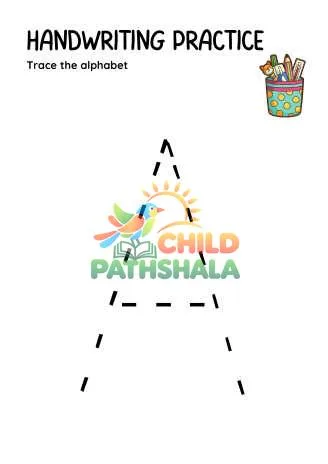
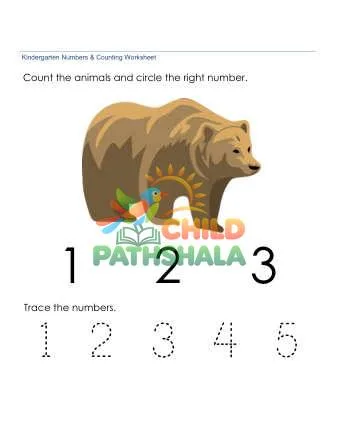
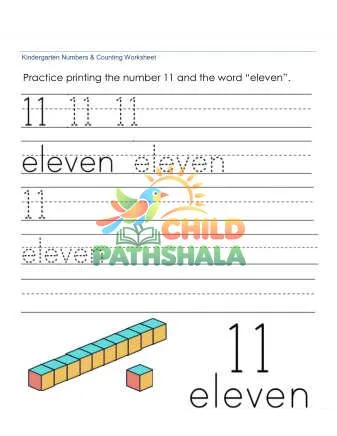
📑 Practice Offline: Matching Printable Worksheets

artgamesparentsplayreading
School Readiness Skills
Kindergarten teachers agree on a short list of skills that make the first year smooth — and the list is shorter than most parents fear.
Watch Kindergarten in action
▶ Now playing: Child Pathshala Printables
📺 Dedicated Watch Page →Parent favorites from the store
View all →
Apply during checkout for instant savings. Shop all bundles →
Looking for Printable Worksheets & Words?
Turn today's ideas into practice — 14,900+ free worksheets by grade, subject and skill, plus an illustrated 30,000-word dictionary.
Keep reading
 Kindergarten
Nursery School Readiness Activities: Social Independence, Separation, and Self-Care
Shalni Kumari
 Kindergarten
Nursery Colouring Activities for Learning: Fine Motor Grip, Color Mixing, and Art
Anand Kumar
 Kindergarten
Nursery General Knowledge Topics for Children: World Awareness, Animals, and Manners
Shalni Kumari
 Kindergarten
LKG Syllabus: Complete Subject-Wise Learning Guide for Parents and Teachers
Shalni Kumari
Get New Learning Activities & Printables
One short email a week — no spam, unsubscribe anytime.