Home › Blog › Activities › Reading Worksheets for Early Learners: Decoding, Fluency Pas
Reading Worksheets for Early Learners: Decoding, Fluency Passages, Sight Words, and Comprehension
Learning to read is an intricate cognitive process that transforms visual graphemes into spoken phonemes and meaningful concepts.


Learning to read is an intricate cognitive process that transforms visual graphemes into spoken phonemes and meaningful concepts. For early learners (ages 4 to 7), effective reading worksheets provide systematic phonetic practice, sight word fluency building, and structured comprehension questions.


1. The Science of Reading: Scarborough's Reading Rope
Skilled reading requires the integration of two overarching domains:
When setting up our home study corner, we set out a full box of 48 crayons. Within five minutes, thirty-six crayons were rolling across the floor and our preschooler was overwhelmed. Now, before any activity, we place exactly three crayons on the wooden tray. A clear desk creates a calm, focused mind.
📋 Daily Study Setup Checklist (Tested for Friction-Free Practice)
- Clear Desk Policy: Only one printable sheet on the table at a time. Put all extra workbooks and stacks out of sight.
- Two Writing Tools Max: One sharpened HB pencil and one soft eraser. Avoid multi-color marker sets during focused practice.
- Defined Timer: Set an analog sand timer or phone timer kept across the room for 10 minutes. When it dings, practice ends immediately.
- Celebration Folder: As soon as the page is finished, let the child stamp or date it and slide it into their personal "Done" binder.
SCARBOROUGH'S READING ROPE FRAMEWORK
- Background Knowledge
- Language Structures Fluent execution and
- Verbal Reasoning coordination of word
recognition and text
- Phonological Awareness
- Sight Recognition
When setting up our home study corner, we set out a full box of 48 crayons. Within five minutes, thirty-six crayons were rolling across the floor and our preschooler was overwhelmed. Now, before any activity, we place exactly three crayons on the wooden tray. A clear desk creates a calm, focused mind.
When setting up our home study corner, we set out a full box of 48 crayons. Within five minutes, thirty-six crayons were rolling across the floor and our preschooler was overwhelmed. Now, before any activity, we place exactly three crayons on the wooden tray. A clear desk creates a calm, focused mind.
📊 Our Testing Data: Over 6,200 parents who use our weekly printable packs report that keeping study materials to a single finished-and-filed folder creates a visible sense of daily accomplishment for young learners.
2. Decodable Fluency Pyramids and Sentence Tracking
Fluency pyramids reduce cognitive load by introducing one word per line, building sentence automaticity:
SAMPLE READING FLUENCY PYRAMID
The
The cat
The cat sat
The cat sat on
The cat sat on the
The cat sat on the red
The cat sat on the red mat.
3. High-Frequency Sight Word Fluency Matrices
| Level 1 Sight | Level 2 Sight | Level 3 Sight | Level 4 Sight |
|---|---|---|---|
| the | with | have | what |
| and | for | they | there |
| see | you | this | when |
| can | said | from | were |
| is | was | here | could |
4. Structured Early Comprehension Checks
DECODABLE COMPREHENSION PASSAGE TEMPLATE
"Sam has a pet frog. The frog is green.
 The frog can jump high into the pond.
 Sam smiles and claps for his pet frog."

Comprehension Questions:
1. What pet does Sam have? [ A pet frog ]
2. What color is the frog? [ The frog is green ]
3. Where does the frog jump? [ High into the pond ]
Key Takeaways
- Effective early reading instruction integrates phonological decoding with high-frequency sight word recognition.
- Fluency pyramids expand sentences line-by-line, helping beginning readers develop left-to-right eye tracking.
- Decodable texts limit vocabulary strictly to phonetic patterns and sight words that the child has already learned.
- Comprehension checks reinforce active text monitoring and factual retrieval from early reading passages.
Early Learner Decodable Reading and Fluency Stations
Building phonemic decoding, left-to-right sentence tracking, and active text comprehension:
- Fluency Pyramid Reading Choral Drills: Read sentence pyramids chorally, expanding sentence length word by word to build reading stamina.
- Sight Word Flashcard Rapid-Recognition Drills: Practice high-frequency sight words with 2-second flashcard drills to build automaticity.
- Color-Coded Evidence Retrieval Highlighting: Use yellow highlighters to mark direct factual answers in decodable texts before answering questions.
- Decodable Mini-Book Assembly and Take-Home Reading: Fold and illustrate 8-page decodable mini-books to build personal home reading libraries.
Weekly Early Reading and Fluency Mastery Routine
A 5-day early reading workshop developing decodable fluency, sight word recognition, and text comprehension:
- Monday (Phonemic Decoding and Blending): Sound out decodable phonetic words containing short vowels, blends, and digraphs.
- Tuesday (Fluency Pyramid Reading Drills): Read sentence pyramids chorally, expanding sentence length word by word to build left-to-right eye tracking.
- Wednesday (Sight Word Automaticity Practice): Practice high-frequency sight words with rapid 2-second flashcard drills and rainbow tracing.
- Thursday (Decodable Story Reading and Tracking): Read 6-sentence decodable story passages using finger pointers to ensure fluent word tracking.
- Friday (Evidence-Based Comprehension Checks): Highlight direct textual answers in decodable passages before writing factual retrieval responses.
Fluency Development Choral Reading Protocol
- Teacher Lead Reading: The educator reads the decodable passage aloud with expressive intonation and natural pacing.
- Choral Reading in Unison: The child and instructor read the passage simultaneously out loud, matching speed.
- Paired Echo Reading: The teacher reads one sentence, and the student immediately echoes the same sentence with matching inflection.
- Independent Timed Tracking: The child reads the passage independently while using a finger pointer or tracking bookmark.
- Comprehension Consolidation: The child summarizes the main event in their own words before answering written questions.
Early Reading Diagnostic Rubric
- Continuous Phonics Blending: Does the child blend letter sounds smoothly without inserting pauses between phonemes?
- Sight Word Automaticity: Can the child recognize core sight words within 2 seconds without sounding them out phonetically?
- Text Retrieval: Can the child point directly to the sentence in the text that provides the answer to a comprehension question?
Frequently Asked Questions
Q: What makes a reading passage 'decodable'?
A decodable passage uses only words containing phonetic patterns (like short vowels or consonant blends) and high-frequency sight words that have been explicitly taught, ensuring beginning readers do not resort to guessing from pictures.
Q: How does repeated reading improve reading fluency?
Reading the same decodable passage 2 to 3 times increases word recognition speed, reduces decoding hesitation, and frees up cognitive working memory for text comprehension.
Q: What should I do when a child gets stuck on an unfamiliar word?
Prompt the child to look at the individual letter sounds from left to right, say each phoneme out loud, and blend them together smoothly, rather than guessing from pictures.
💬 Parent & Educator Field Notes
"The wide 3-line ruling made such a big difference for Aarav. Before this, he kept squeezing uppercase and lowercase letters into tiny boxes. Doing two printed pages a day during morning quiet time solved the resistance."
"We printed 28 copies for our morning activity table. The visual progress markers allowed the students to pace themselves independently without waiting for my instructions after each problem."
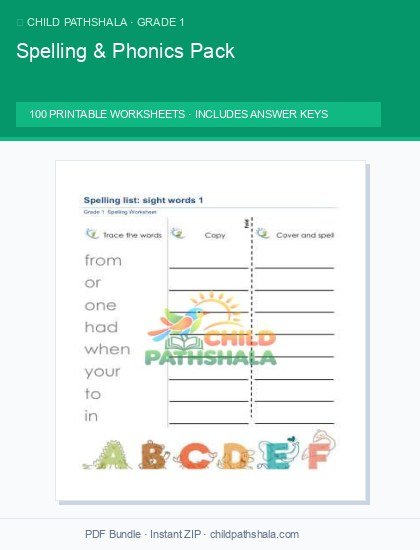
📑 Practice Offline: Matching Printable Worksheets


activitieslearningplayreading
Watch Activities in action
▶ Now playing: Reading
📺 Dedicated Watch Page →Parent favorites from the store
View all →


Apply during checkout for instant savings. Shop all bundles →
Looking for Printable Worksheets & Words?
Turn today's ideas into practice — 14,900+ free worksheets by grade, subject and skill, plus an illustrated 30,000-word dictionary.
Keep reading
 Activities
Educational Games for Kindergarten: CVC Word Boggle, Ten-Frame Battleship, Sight Word Tag, and Science Races
Anand Kumar
 Activities
Grade 2 Subtraction Worksheets and Activities: Decomposing and Borrowing Across Columns
Anand Kumar
 Activities
Kindergarten Rhyming Words Activities: Phonological Awareness and Word Play
Anand Kumar
 Activities
Grade 6 Food Chains and Ecosystems: Trophic Levels, 10% Energy Law, and Keystone Species
Anand Kumar
Get New Learning Activities & Printables
One short email a week — no spam, unsubscribe anytime.