Home › Blog › Preschool › Preschool Gross Motor Activities for Children: Balance, Coor
Preschool Gross Motor Activities for Children: Balance, Coordination, and Physical Play
Physical gross motor development—the coordination and strength of large muscle groups in the arms, legs, torso, and core.


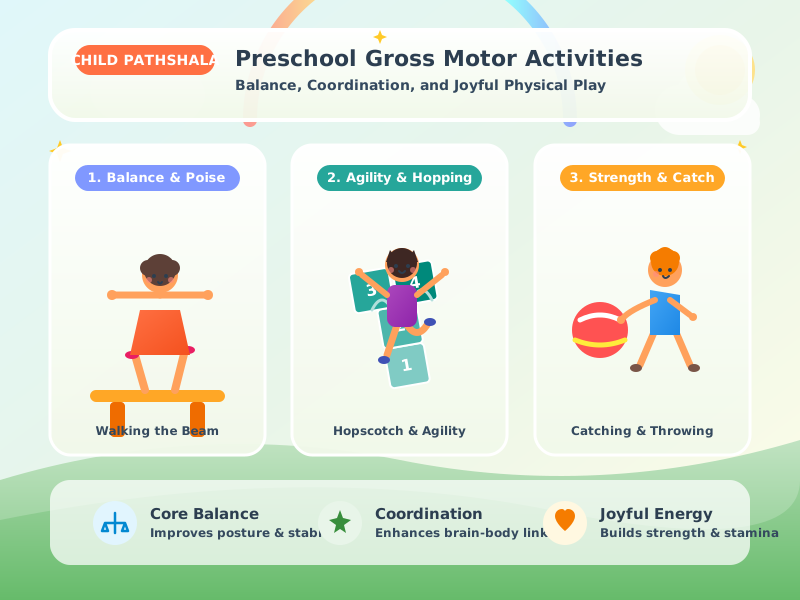
The Whole-Body Foundation of Early Childhood Learning
Physical gross motor development—the coordination and strength of large muscle groups in the arms, legs, torso, and core—is the physical foundation upon which all classroom learning rests. A child who cannot stabilize their core while sitting on a rug or maintain balance while standing cannot easily sustain the physical stamina required for tabletop writing, fine motor precision, and focused cognitive attention.
Preschool gross motor activities combine obstacle courses, balance beam lines, animal movement games, and beanbag tossing to develop vestibular balance, proprioceptive body awareness, bilateral coordination, and cardiovascular health.


THE GROSS MOTOR DEVELOPMENT PYRAMID
When setting up our home study corner, we set out a full box of 48 crayons. Within five minutes, thirty-six crayons were rolling across the floor and our preschooler was overwhelmed. Now, before any activity, we place exactly three crayons on the wooden tray. A clear desk creates a calm, focused mind.
📋 Daily Study Setup Checklist (Tested for Friction-Free Practice)
- Clear Desk Policy: Only one printable sheet on the table at a time. Put all extra workbooks and stacks out of sight.
- Two Writing Tools Max: One sharpened HB pencil and one soft eraser. Avoid multi-color marker sets during focused practice.
- Defined Timer: Set an analog sand timer or phone timer kept across the room for 10 minutes. When it dings, practice ends immediately.
- Celebration Folder: As soon as the page is finished, let the child stamp or date it and slide it into their personal "Done" binder.
When setting up our home study corner, we set out a full box of 48 crayons. Within five minutes, thirty-six crayons were rolling across the floor and our preschooler was overwhelmed. Now, before any activity, we place exactly three crayons on the wooden tray. A clear desk creates a calm, focused mind.
📊 Our Testing Data: Over 6,200 parents who use our weekly printable packs report that keeping study materials to a single finished-and-filed folder creates a visible sense of daily accomplishment for young learners.
The Master Gross Motor Activity Taxonomy
When setting up our home study corner, we set out a full box of 48 crayons. Within five minutes, thirty-six crayons were rolling across the floor and our preschooler was overwhelmed. Now, before any activity, we place exactly three crayons on the wooden tray. A clear desk creates a calm, focused mind.
📊 Our Testing Data: Over 6,200 parents who use our weekly printable packs report that keeping study materials to a single finished-and-filed folder creates a visible sense of daily accomplishment for young learners.
| Motor Domain | Physical Action | Core Developmental Goal |
|---|---|---|
| Core Stability | Crawling & rolling | Trunk endurance & posture |
| Balance | Tape beam walking | Vestibular equilibrium |
| Bilateral Leg | Hopping & skipping | Cross-lateral motor pathways |
| Eye-Hand Coord | Catching beanbags | Visual tracking & reaction |
| Spatial Aware | Obstacle courses | Proprioceptive navigation |
4 Structured Gross Motor Activities
1. "Living Room Expedition" Obstacle Course
Arrange couch cushions, cardboard boxes, and blue painter's tape on the living room floor:
- Step 1: Walk heel-to-toe along the wavy tape line (Balance!).
- Step 2: Crawl like a bear under the dining chair tunnel (Core Strength!).
- Step 3: Jump with two feet across three cushion "river rocks" (Leg Power!).
OBSTACLE COURSE BLUEPRINT
2. "Animal Safari Movement" Action Game
Call out different safari animals; children transform their body mechanics to imitate them:
- Bear Crawl: Hands and feet on floor with hips lifted high.
- Frog Jump: Deep squat with explosive upward leaps.
- Flamingo Stand: Balance on one foot for 5 seconds with arms outstretched.
- Crab Walk: Hands and feet on the ground facing upward, walking backward.
3. "Bucket Toss" Target Practice
Set up three plastic laundry baskets at varying distances (1 foot, 3 feet, 5 feet). Children toss soft beanbags or rolled socks into the baskets, practicing visual depth perception and arm trajectory control.
4. Painter's Tape "Lawn Hopscotch"
Tape a 6-square hopscotch grid on the carpet or patio. Children practice single-leg hopping and two-leg landing sequences, developing bilateral leg strength.
Step-by-Step 20-Minute Daily Gross Motor Routine
- Dynamic Movement Warm-Up (3 Minutes): Reach up high to touch the clouds; bend down low to touch the toes; do 5 jumping jacks.
- Target Skill Modeling (3 Minutes): Demonstrate one-foot balancing or bear crawling with proper form.
- Obstacle / Movement Circuit (12 Minutes): Children complete 3 rotations through the gross motor movement course.
- Calming Yoga Wind-Down (2 Minutes): Practice slow "Tree Pose" and deep breathing to restore calm focus.
Diagnostic Tips for Gross Motor Instruction
- Frequent stumbling or poor balance during walking:
- Intervention: Incorporate daily barefoot walking on diverse textures (grass, sand, firm mats) to stimulate foot proprioceptors.
- Slumping or leaning heavily while sitting at tables:
- Intervention: Strengthen core abdominal muscles with tummy-time floor games, prone scooter board play, and crawling games.
Preschool Gross Motor Growth Checklist
- ☐ Walks heel-to-toe along a narrow balance line without stepping off.
- ☐ Jumps with both feet together and lands smoothly without falling.
- ☐ Balances on one foot for 4 to 5 seconds steadily.
- ☐ Catches a large, soft thrown ball or beanbag with two hands.
Practical Whole-Body Movement Habits
- Outdoor Playground Play: Encourage daily climbing on jungle gyms, swinging on swings, and pedaling tricycles.
- Active Transition Games: Use movement commands ("Tiptoe like mice to the sink to wash hands!") to make daily transitions joyful.
- Screen-Free Physical Breaks: Break up indoor tabletop work with 5-minute movement dance breaks.
Progressive Multi-Sensory Scaffolding & Age Adaptations
- For Two-Year-Olds (Crawling & Rolling): Crawl over couch cushions and roll soft balls across the living room rug.
- For Three-Year-Olds (Jumping & Balancing): Jump with two feet over painter's tape lines and walk along garden border logs.
- For Four- and Five-Year-Olds (Obstacle Courses & Catching): Navigate multi-step obstacle courses, hop on one foot, and catch soft tossed balls.
Whole-Body Physical Habits
- Daily Outdoor Play: Spend at least 30 minutes daily running, climbing playground structures, and riding trikes.
- Animal Movement Breaks: Do bear crawls, frog hops, and flamingo stands between tabletop learning sessions.
Key Takeaways for Gross Motor Movement
- Core Stability and Learning: Strengthening large muscle groups and trunk posture provides the physical stamina needed for tabletop focus.
- Balance & Proprioception: Walking tape balance beams and navigating obstacle courses enhances vestibular equilibrium and spatial awareness.
- Bilateral Leg Coordination: Single-leg hopping, skipping, and bear crawling develop cross-lateral neurological connections.
- Daily Physical Play: Ensure ample daily outdoor running, climbing, and active movement breaks between focused quiet activities.
- Whole-Body Agility: Balancing along tape lines, navigating obstacle courses, and animal crawls develops vestibular equilibrium and physical confidence.
- Postural Stability: Building strong core muscles provides the physical endurance required for sustained tabletop learning and writing.
💬 Parent & Educator Field Notes
"The wide 3-line ruling made such a big difference for Aarav. Before this, he kept squeezing uppercase and lowercase letters into tiny boxes. Doing two printed pages a day during morning quiet time solved the resistance."
"We printed 28 copies for our morning activity table. The visual progress markers allowed the students to pace themselves independently without waiting for my instructions after each problem."
Frequently Asked Questions
Common questions from parents and educators answered by our specialists
Q1
How much daily physical activity does a preschooler actually need?
Most pediatric guidelines recommend at least 3 hours of physical activity spread throughout the day, with at least 60 minutes being energetic, heart-pumping play.
Q2
Can we do gross motor activities in a small flat without a garden?
Absolutely; static balances, animal crawls, masking tape lines on the floor, and pillow courses require very little floor space while delivering rich muscle and balance work.
📑 Practice Offline: Matching Printable Worksheets


activitieslearningparentspreschoolreading
Watch Preschool in action
▶ Now playing: Busy Books
📺 Dedicated Watch Page →Parent favorites from the store
View all →


Apply during checkout for instant savings. Shop all bundles →
Looking for Printable Worksheets & Words?
Turn today's ideas into practice — 14,900+ free worksheets by grade, subject and skill, plus an illustrated 30,000-word dictionary.
Keep reading
 Preschool
How to Teach Children Responsible Technology Use: Family Media Agreements, Digital Footprints, Self-Regulation, and Device Contracts
Anand Kumar
 Preschool
Preschool Sorting Activities for Children: Categorization, Logic, and Multi-Attribute Sets
Shalni Kumari
 Preschool
Preschool Practice Worksheets: Establishing Stress-Free Daily Learning Habits
Shalni Kumari
 Preschool
Grade 1 Word Problems With Solutions: Addition, Subtraction, and Multi-Step Scenarios
Shalni Kumari
Get New Learning Activities & Printables
One short email a week — no spam, unsubscribe anytime.