Home › Blog › Preschool › Nature Coloring Worksheets: Exploring Botanical Landscapes,
Nature Coloring Worksheets: Exploring Botanical Landscapes, Forests, Mountains, and Ecosystems
Nature is the ultimate artist.


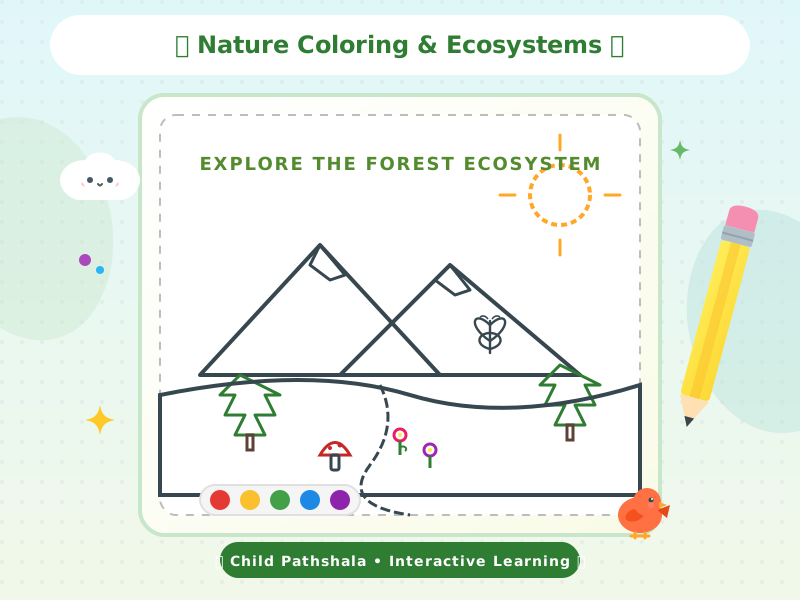
Cultivating Environmental Appreciation Through Art
Nature is the ultimate artist. From the rich autumn golds of deciduous forests to the emerald blues of mountain lakes and the lively petals of spring wildflower meadows, the natural world offers an infinite palette of colors, textures, and patterns. Engaging children in nature coloring fosters mindfulness, reduces screen fatigue, and builds deep environmental stewardship.
Nature coloring worksheets provide structured botanical landscapes, forest ecosystems, river valleys, and garden scenes. By observing natural light gradients, organic foliage patterns, and geological formations, children develop artistic shading skills alongside ecological awareness.


THE NATURE ART & ECOLOGY BRIDGE
When setting up our home study corner, we set out a full box of 48 crayons. Within five minutes, thirty-six crayons were rolling across the floor and our preschooler was overwhelmed. Now, before any activity, we place exactly three crayons on the wooden tray. A clear desk creates a calm, focused mind.
📋 Daily Study Setup Checklist (Tested for Friction-Free Practice)
- Clear Desk Policy: Only one printable sheet on the table at a time. Put all extra workbooks and stacks out of sight.
- Two Writing Tools Max: One sharpened HB pencil and one soft eraser. Avoid multi-color marker sets during focused practice.
- Defined Timer: Set an analog sand timer or phone timer kept across the room for 10 minutes. When it dings, practice ends immediately.
- Celebration Folder: As soon as the page is finished, let the child stamp or date it and slide it into their personal "Done" binder.
When setting up our home study corner, we set out a full box of 48 crayons. Within five minutes, thirty-six crayons were rolling across the floor and our preschooler was overwhelmed. Now, before any activity, we place exactly three crayons on the wooden tray. A clear desk creates a calm, focused mind.
📊 Our Testing Data: Over 6,200 parents who use our weekly printable packs report that keeping study materials to a single finished-and-filed folder creates a visible sense of daily accomplishment for young learners.
The Master Nature Ecosystem Matrix
When setting up our home study corner, we set out a full box of 48 crayons. Within five minutes, thirty-six crayons were rolling across the floor and our preschooler was overwhelmed. Now, before any activity, we place exactly three crayons on the wooden tray. A clear desk creates a calm, focused mind.
📊 Our Testing Data: Over 6,200 parents who use our weekly printable packs report that keeping study materials to a single finished-and-filed folder creates a visible sense of daily accomplishment for young learners.
| Ecosystem Theme | Botanical Features | Dominant Chromatic Palette |
|---|---|---|
| Alpine Forest | Pine trees, peaks | Evergreen, slate gray, white |
| Spring Garden | Tulips, sunflowers | Rose pink, golden, violet |
| Desert Oasis | Cacti, sand dunes | Terracotta, sandy tan, amber |
| Tropical Jungle | Broad palm leaves | Deep emerald, lime, crimson |
| Autumn Woods | Deciduous canopy | Burnt orange, scarlet, gold |
4 Structured Nature Coloring Worksheet Formats
1. Mountain Peak & River Valley Landscape Scenes
Full-page panoramic illustrations featuring snow-capped mountain peaks, flowing freshwater rivers, rocky boulders, and evergreen forests, encouraging broad horizontal shading.
MOUNTAIN PANORAMA BLUEPRINT
+-------------------------------------------------------------------+
| [ Distant Jagged Mountain Peaks with Snow-Capped Summits         ] |
| [ Winding Sparkling River Flowing Through Evergreen Pine Valley  ] |
| [ Wildflower Meadow with Butterflies in the Sunlit Foreground    ] |
+-------------------------------------------------------------------+
2. Botanical Flower Anatomy & Garden Coloring Mats
Students color detailed illustrations of garden flowers (Sunflower, Rose, Tulip, Daisy), identifying and shading the petals, stem, leaves, and center seed disk.
3. Four Seasons Nature Cycle Trees
A four-panel worksheet showing how a single woodland tree transforms its foliage across Spring, Summer, Autumn, and Winter.
4. Close-Up Forest Floor Micro-World Mats
Detailed illustrations of forest floor ecology: mushrooms on a fallen log, moss-covered stones, acorns, pinecones, and tiny crawling snails.
Step-by-Step 15-Minute Daily Nature Art Routine
- Outdoor Sensory Reflection (3 Minutes): Close eyes and describe an outdoor nature scene you love (the ocean breeze, walking through fallen autumn leaves).
- Color Blending Demonstration (2 Minutes): Demonstrate blending two shades of green (light lime and dark forest green) to create realistic tree leaf depth.
- Target Worksheet Execution (8 Minutes): Students independently color their nature landscape with calm, focused strokes.
- Nature Gallery Showcase (2 Minutes): Students share their completed botanical artwork with the class.
Diagnostic Tips for Nature Art Practice
- Using only one single shade of green for all plant life:
- Intervention: Teach "Layered Greenery": combine yellow-green for sunlit leaf tops and blue-green for deep shaded branches beneath.
- Rushing through complex natural textures like tree bark or mountain rocks:
- Intervention: Show students how to use gentle horizontal pencil strokes for water and textured vertical strokes for tree trunks.
Chromatic Layering Techniques for Nature Landscapes
Teach elementary artists how to create depth and perspective in botanical landscapes:
THE 3-TIER LANDSCAPE PERSPECTIVE
- Background (Distant Mountains & Sky):  Light, pale, hazy cool blues & soft purples
- Midground  (Forest Trees & Rivers):     Medium greens, warm slate grays, earthy tones
- Foreground (Wildflowers & Boulders):   Vivid, saturated crimsons, bright yellows, crisp dark details
Environmental Stewardship and Nature Reflection
- Leave No Trace Reflection: Discuss how coloring beautiful wilderness scenes reminds us to protect parks, keep rivers clean, and recycle plastic waste.
- Mindful Outdoor Sketching: Take clipboards outside to draw and color live trees and flowers directly from nature.
Botanical Landscape and Environmental Art Checklist
- ☐ Uses chromatic layering techniques (combining multiple shades of green, brown, and blue) to create depth in natural scenes.
- ☐ Identifies core botanical features (petals, stems, leaves, tree rings, forest floor moss) in landscape illustrations.
- ☐ Demonstrates careful horizontal shading for waterways and textured vertical strokes for tree trunks.
- ☐ Expresses appreciation for natural wilderness ecosystems, wildlife habitats, and environmental conservation.
Forest Conservation and Global Ecosystem Protection
Connect botanical landscape art with real-world environmental care:
- Reforestation Reflection: Discuss how planting trees absorbs carbon dioxide, purifies air, and prevents soil erosion on mountain hillsides.
- Wildflower Pollinator Meadows: Explore how planting native wildflowers provides essential nectar for declining honeybee and butterfly populations.
- Mindful Nature Connection: Observing and coloring natural landscape features—from mountain summits to forest floor moss—cultivates environmental stewardship and creative relaxation.
- Landscape Horizon Shading: Learning to layer light background blues behind rich foreground greens teaches fundamental principles of landscape perspective.
- Botanical Ecosystem Awareness: Coloring natural landscapes—including mountain forests, riverbanks, and wildflower meadows—nurtures mindfulness, spatial perspective, and environmental care.
- Layered Shading Mastery: Blending light yellow-greens with deep forest-greens teaches young artists how to capture realistic light and shadow in nature art.
- Environmental Stewardship: Engaging in nature landscape coloring encourages children to appreciate forest canopies, mountain valleys, and outdoor ecosystem conservation.
- Mindful Art Relaxation: Quiet botanical shading exercises promote calm emotional regulation and sustained academic attention in the classroom.
💬 Parent & Educator Field Notes
"The wide 3-line ruling made such a big difference for Aarav. Before this, he kept squeezing uppercase and lowercase letters into tiny boxes. Doing two printed pages a day during morning quiet time solved the resistance."
"We printed 28 copies for our morning activity table. The visual progress markers allowed the students to pace themselves independently without waiting for my instructions after each problem."
Frequently Asked Questions
Common questions from parents and educators answered by our specialists
Q1
What are the best coloring tools to use with nature worksheets for young kids?
Chunky triangular wax crayons or thick tempera paint sticks work best for ages 3-4 because they don't roll away and support developing grip. For ages 5-7, wooden colored pencils offer better precision for fine leaf veins and tiny insects.
Q2
How do I stop my child from scribbling outside the lines?
Don't worry too much about it before age five. Focus on hand strength and enjoyment first; fine motor control develops naturally through sensory play, clay work, and casual outdoor exploration.
📑 Practice Offline: Matching Printable Worksheets


coloringcolorsgamesnatureplay
Nature Coloring Worksheets
Looking for nature coloring worksheets pages that are genuinely useful — not just busywork?
Watch Preschool in action
▶ Now playing: Coloring Sheets
📺 Dedicated Watch Page →Parent favorites from the store
View all →


Apply during checkout for instant savings. Shop all bundles →
Looking for Printable Worksheets & Words?
Turn today's ideas into practice — 14,900+ free worksheets by grade, subject and skill, plus an illustrated 30,000-word dictionary.
Keep reading
 Preschool
How to Teach Children Responsible Technology Use: Family Media Agreements, Digital Footprints, Self-Regulation, and Device Contracts
Anand Kumar
 Preschool
Preschool Sorting Activities for Children: Categorization, Logic, and Multi-Attribute Sets
Shalni Kumari
 Preschool
Preschool Practice Worksheets: Establishing Stress-Free Daily Learning Habits
Shalni Kumari
 Preschool
Grade 1 Word Problems With Solutions: Addition, Subtraction, and Multi-Step Scenarios
Shalni Kumari
Get New Learning Activities & Printables
One short email a week — no spam, unsubscribe anytime.