Home › Blog › Preschool › Life Skills Children Should Learn by Age: Executive Function
Life Skills Children Should Learn by Age: Executive Function, Meal Prep, Laundry, Personal Safety, and Money Management
Academic success represents only one pillar of childhood development.


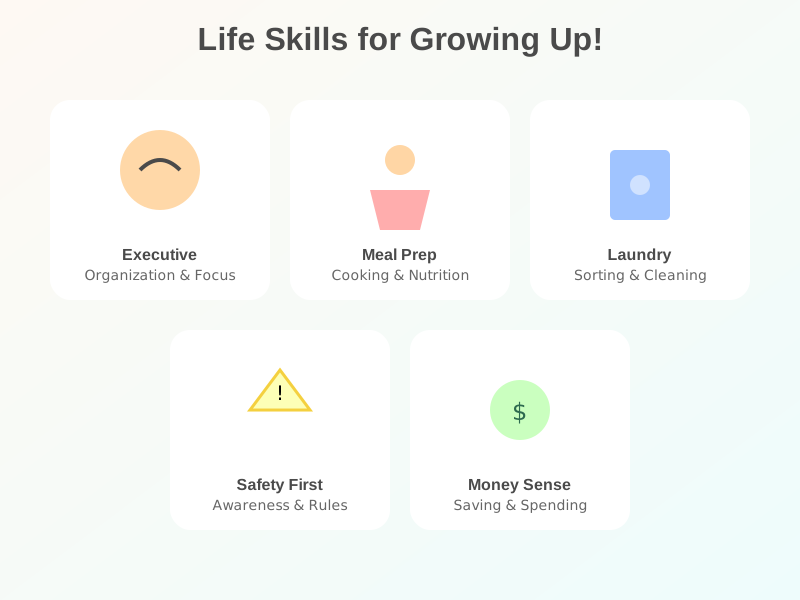
Academic success represents only one pillar of childhood development. To thrive as capable, self-reliant adults, children must master practical life skills: preparing nutritious meals, managing personal hygiene, resolving conflicts, maintaining living spaces, and budgeting money.
Gradually introducing age-calibrated practical responsibilities builds genuine self-efficacy and resilience.


1. The Developmental Life Skills Continuum
THE LIFE SKILLS PROGRESSION ROADMAP
When setting up our home study corner, we set out a full box of 48 crayons. Within five minutes, thirty-six crayons were rolling across the floor and our preschooler was overwhelmed. Now, before any activity, we place exactly three crayons on the wooden tray. A clear desk creates a calm, focused mind.
2. Comprehensive Master Life Skills Matrix by Age Group
| Age Group | Core Domain | Signature Practical Life Skill | Mastery Benchmark |
|---|---|---|---|
| Preschool (Ages 3-5) | Personal Hygiene & Chores | Brushing teeth independently, putting shoes on correct feet | Completes morning hygiene routine with minimal prompts. |
| Lower Primary (Ages 6-8) | Food Prep & Safety | Spreading butter, slicing bananas with safe knife, dialing 911 | Prepares cold breakfast and knows full home address and parent phone. |
| Upper Primary (Ages 9-11) | Domestic Maintenance | Operating washing machine, cooking scrambled eggs on stove | Washes, folds, and puts away own clothing independently. |
| Middle School (Ages 12-14) | Financial & Civic Life | Managing a bank account, navigating public transit, babysitting | Budgets monthly allowance and navigates local bus route safely. |
3. Step-by-Step Practical Skill: Laundry Mastery (Ages 9-12)
Teach laundry independence using a structured 4-step sequence:
THE 4-STEP LAUNDRY INDEPENDENCE BLUEPRINT
1. Sorting: Separate clothes into Whites (hot/warm wash), Colors (cold wash), and Delicates/Wool.
2. Loading & Detergent: Fill drum 3/4 full; measure 1 tablespoon concentrated detergent into dispenser.
3. Machine Settings: Select "Normal / Cold Cycle" for everyday clothes; press Start.
4. Drying & Folding: Transfer immediately to dryer (or clothesline); fold along seams and store in drawers.
4. Kitchen Safety and Basic Cooking Progression
KITCHEN SKILL PROGRESSION BY GRADE LEVEL
- Kindergarten: Washing produce, tearing lettuce, stirring batter, snapping green beans.
- Grades 1-2: Spreading cream cheese, peeling carrots with peeler, measuring dry ingredients.
- Grades 3-4: Using chef's knife with "Claw Grip", operating toaster oven, making oatmeal.
- Grades 5-6: Operating stovetop under supervision (scrambled eggs, pasta, grilled cheese).
5. Life Skill Diagnostic Checklist
- Daily Morning Self-Sufficiency: Can the child dress, pack their bag, and eat breakfast without constant parental direction?
- Emergency Preparedness: Does the child know their home address, parent mobile numbers, and when to call emergency services?
- Basic Domestic Contribution: Does the child contribute to household chores without expecting transactional financial payment?
6. Key Takeaways
- Scaffold Practical Skills: Teach chores step-by-step just like academic subjects.
- Start Early with Kitchen Tasks: Food preparation builds fine motor skills and healthy nutritional habits.
- nurture True Responsibility: Contributing to family chores builds belonging and self-worth.
5-Day Practical Life Skills Progression by Age
A developmental routine building self-reliance, domestic competence, and personal safety:
- Monday (Personal Hygiene and Morning Self-Care): Practice independent teeth brushing, clothing coordination, and shoe-tying rituals.
- Tuesday (Kitchen Food Preparation and Knife Safety): Learn the "Claw Grip" for cutting vegetables, prepare a cold breakfast, and spread spreads safely.
- Wednesday (Domestic Maintenance and Laundry Sorting): Sort laundry into whites and colors, measure detergent, and fold garments neatly.
- Thursday (Personal Safety and Emergency Protocols): Memorize home address, emergency phone numbers, and practice dialing 911 scenarios.
- Friday (Weekly Chores and Family Contribution): Complete assigned household cleaning tasks collaboratively without transactional complaints.
Life Skills Diagnostic Rubric
- Autonomous Execution: Can the child complete age-appropriate tasks (bed-making, packing lunch) with minimal prompting?
- Safety Awareness: Does the child demonstrate cautious safety habits around stovetops, knives, and household appliances?
- Domestic Responsibility: Does the child take pride in maintaining their personal space and contributing to family chores?
Age-Appropriate Practical Life Mastery Checklist
- Preschool (Ages 3-5): Dressing independently (zippers, velcro, buttons), washing hands with soap, tidying play areas, and using napkins properly.
- Lower Primary (Ages 6-8): Tying shoelaces, packing school backpacks, clearing dining dishes, brushing teeth thoroughly, and preparing cold snacks.
- Upper Primary (Ages 9-11): Making beds with fitted sheets, operating washing machines, preparing simple hot meals, and maintaining basic room hygiene.
- Middle School (Ages 12-14): Planning weekly family meals, managing personal budget logs, basic hand-sewing repairs, and operating household appliances safely.
Home Independence Scaffolding Protocol
- Direct Demonstration: Parent executes the practical chore slowly, explaining safety rules and key technique points.
- Collaborative Execution: Parent and child work together on the task (e.g., parent holds pan handle while child flips pancake).
- Supervised Independence: Child completes the chore independently while parent observes quietly nearby.
- Full Automation: Task is integrated into the child's daily visual routine checklist with zero parental reminders required.
Frequently Asked Questions
Q: Should children receive an allowance for doing basic daily chores?
Most child psychologists recommend separating basic citizenship chores (making one's bed, clearing one's plate) from allowance. An allowance is a financial literacy teaching tool, not a transactional wage for basic family membership.
Q: What should I do if my child does a chore poorly (e.g., messy bed making)?
Avoid re-doing it immediately in front of them, which undermines confidence. Praise their effort and offer gentle coaching during the next session: "Let's see how smoothing this corner makes the blanket fit perfectly!"
📑 Practice Offline: Matching Printable Worksheets


activitieslearningpreschool
Watch Preschool in action
▶ Now playing: Child Pathshala Printables
📺 Dedicated Watch Page →Parent favorites from the store
View all →


Apply during checkout for instant savings. Shop all bundles →
Looking for Printable Worksheets & Words?
Turn today's ideas into practice — 14,900+ free worksheets by grade, subject and skill, plus an illustrated 30,000-word dictionary.
Keep reading
 Preschool
How to Teach Children Responsible Technology Use: Family Media Agreements, Digital Footprints, Self-Regulation, and Device Contracts
Anand Kumar
 Preschool
Preschool Sorting Activities for Children: Categorization, Logic, and Multi-Attribute Sets
Shalni Kumari
 Preschool
Preschool Practice Worksheets: Establishing Stress-Free Daily Learning Habits
Shalni Kumari
 Preschool
Grade 1 Word Problems With Solutions: Addition, Subtraction, and Multi-Step Scenarios
Shalni Kumari
Get New Learning Activities & Printables
One short email a week — no spam, unsubscribe anytime.