Home › Blog › Kindergarten › A Practical Kindergarten Learning Checklist: Essential Skill
A Practical Kindergarten Learning Checklist: Essential Skills and Everyday Milestones
When a child is five or six years old, parents are often bombarded with conflicting advice about what their child "should" know.


When a child is five or six years old, parents are often bombarded with conflicting advice about what their child "should" know. Social media shows kindergarteners solving multiplication problems or reading chapter books, while school orientation packets present daunting lists of academic expectations.
This flood of information can easily trigger parental anxiety: Is my child falling behind? Should we be doing more flashcards? Are they ready for the next grade?
remember this: that kindergarten development is not a uniform race. Children develop in uneven spurts; a child who is exceptional at building complex Lego structures might take longer to hold a pencil comfortably, while an avid talker might still be working on one-to-one counting.


Here is a practical, developmentally grounded checklist of meaningful kindergarten competencies across early literacy, numeracy, motor skills, and social-emotional independence to help you guide your child with clarity and peace of mind.
1. Early Literacy and Pre-Reading Milestones
Reading readiness is built on auditory awareness and conversational depth, not rote memorization.
When setting up our home study corner, we set out a full box of 48 crayons. Within five minutes, thirty-six crayons were rolling across the floor and our preschooler was overwhelmed. Now, before any activity, we place exactly three crayons on the wooden tray. A clear desk creates a calm, focused mind.
- ☐ Letter-Sound Recognition: Recognizes most uppercase and lowercase letters and knows their primary sounds (especially high-utility sounds like s, a, t, p, m, c).
- ☐ Phonemic Awareness: Can identify rhyming words (cat/hat), isolate the starting sound in simple words (dog starts with /d/), and blend two or three spoken sounds together (c-a-t makes cat).
- ☐ Print Concepts: Understands that books are read from front to back, text flows from left to right, and words are separated by spaces.
- ☐ Story Comprehension: Can listen to a picture book, predict what might happen next based on illustrations, and retell the main beginning, middle, and ending events.
- ☐ Name Writing: Can write their own first name legibly with a capital starting letter and lowercase remaining letters.
2. Mathematical Reasoning and Number Sense
Kindergarten math is about developing quantitative intuition and spatial understanding.
- ☐ Counting with One-to-One Correspondence: Accurately counts up to 20 physical objects by touching or moving one item per number without skipping.
- ☐ Cardinality: Understands that the last number counted represents the total amount of the group.
- ☐ Subitizing: Recognizes small groups of items (1 to 5 dots on a die or fingers on a hand) instantly without counting each one individually.
- ☐ Number Comparisons: Uses comparative language (more than, less than, equal to, heavier, lighter, longer, shorter) accurately when comparing two groups.
- ☐ Basic Operations with Manipulatives: Solves simple addition and subtraction problems within 10 using fingers, counters, or drawings ("I have 3 blocks and get 2 more, now I have 5").
- ☐ 2D and 3D Shapes: Identifies circles, squares, triangles, and rectangles, and recognizes that shapes have defining attributes like straight sides and corners.
- ☐ Pattern Recognition: Can identify, duplicate, and extend simple repeating patterns (such as red-blue-red-blue or big-small-big-small).
3. Fine Motor and Physical Coordination
Strong hands and gross motor balance are essential for handwriting endurance and classroom participation.
- ☐ Mature Pencil Grasp: Holds a pencil, crayon, or marker with a functional three-finger tripod grasp rather than a tight full-fist grip.
- ☐ Scissor Skills: Can hold child-safe scissors correctly and cut along straight, curved, and simple zigzag lines on paper.
- ☐ Hand Strength: Can manipulate playdough, open and close Ziploc bags, screw bottle caps on tightly, and pinch clothespins.
- ☐ Gross Motor Balance: Can balance on one foot for five seconds, jump forward with both feet together, hop, and catch a medium-sized tossed ball.
- ☐ Bilateral Coordination: Uses one hand to stabilize paper or hold a container while the dominant hand performs a task (cutting, writing, or pouring).
4. Social-Emotional and Self-Care Independence
Often overlooked in academic checklists, social-emotional maturity is the single strongest predictor of long-term school success.
- ☐ Bathroom Independence: Uses the restroom completely independently, including wiping, adjusting clothing, and washing hands with soap.
- ☐ Self-Care Routines: Can put on their own shoes, zip or button a jacket with minimal help, open lunchbox containers, and blow their nose.
- ☐ Emotional Regulation: Can express feelings with words ("I feel frustrated" or "I need help") rather than physical outbursts when upset.
- ☐ Following Multi-Step Directions: Can listen to, remember, and carry out two or three-step instructions ("Take off your shoes, wash your hands, and come to the table").
- ☐ Turn-Taking and Sharing: Participates in cooperative games, takes turns without extreme distress, and shows basic empathy when a friend is sad.
- ☐ Sustained Focus: Can engage in a self-directed play activity or focused task for 15 to 20 minutes without continuous adult redirection.
What Parents Can Safely Stop Worrying About
In the rush toward academic achievement, it helps to know what is NOT necessary in kindergarten:
- Writing in perfectly straight lines: Young hands are still developing spatial control; large, slightly uneven handwriting is completely age-appropriate.
- Reading thick chapter books: The focus should be on building a love for stories and solid decoding of simple texts.
- Memorizing hundreds of isolated sight words: Real fluency develops gradually as phonics and connected reading practice progress.
- Sitting still for hours: High physical energy is biologically natural for five-year-olds and should be welcomed through active movement breaks.
Using This Checklist Constructively
Use this checklist not as a high-stakes scorecard, but as a gentle guide to identify areas where your child might enjoy a little extra playful support. Celebrate their unique strengths, nurture their curiosity, and trust in the natural rhythm of childhood growth.
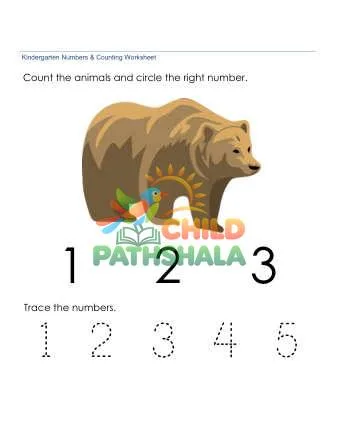
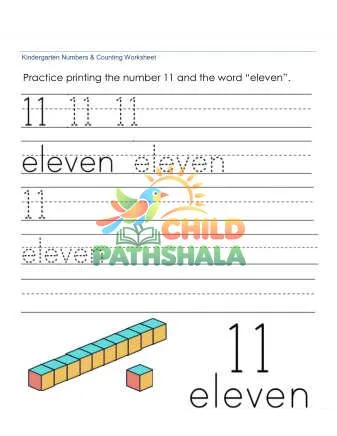
📑 Practice Offline: Matching Printable Worksheets

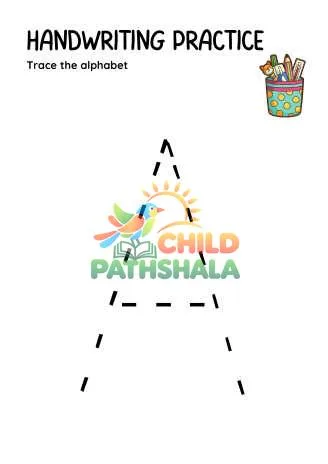
kindergarten
Checklist Into Practice
Printable worksheets matched to every skill.
Watch Kindergarten in action
▶ Now playing: Child Pathshala Printables
📺 Dedicated Watch Page →Parent favorites from the store
View all →
Apply during checkout for instant savings. Shop all bundles →
Looking for Printable Worksheets & Words?
Turn today's ideas into practice — 14,900+ free worksheets by grade, subject and skill, plus an illustrated 30,000-word dictionary.
Keep reading
 Kindergarten
Nursery School Readiness Activities: Social Independence, Separation, and Self-Care
Shalni Kumari
 Kindergarten
Nursery Colouring Activities for Learning: Fine Motor Grip, Color Mixing, and Art
Anand Kumar
 Kindergarten
Nursery General Knowledge Topics for Children: World Awareness, Animals, and Manners
Shalni Kumari
 Kindergarten
LKG Syllabus: Complete Subject-Wise Learning Guide for Parents and Teachers
Shalni Kumari
Get New Learning Activities & Printables
One short email a week — no spam, unsubscribe anytime.