Home › Blog › Science › Kindergarten Blending Sounds Activities: Continuous Phonatio
Kindergarten Blending Sounds Activities: Continuous Phonation and CVC Synthesis
Sound blending is the cognitive process of smoothly combining individual spoken speech sounds (phonemes) to form a recognizable word.


Mastering the Art of Sound Blending in Early Reading
Sound blending is the cognitive process of smoothly combining individual spoken speech sounds (phonemes) to form a recognizable word. For beginner readers, moving from sounding out isolated letters (/s/ ... /u/ ... /n/) to synthesizing the full word ("sun") is the single most critical breakthrough in literacy development.
Many young children struggle with choppy blending—pausing too long between sounds or adding trailing schwa sounds ("suh-uh-nuh"), which causes the working memory to lose track of the word. Teaching continuous phonation blending keeps the acoustic stream connected, allowing children to hear the whole word effortlessly.


THE CONTINUOUS BLENDING MECHANISM
Choppy (Inefficient): /s/ ... (pause) ... /a/ ... (pause) ... /t/
Result -> Working memory drops the word
Continuous (Effective): "ssssssss-aaaaaaaa-tttt"
Result -> Smooth synthesis into "sat"
We tried scheduling study time for a rigid 4:00 PM slot right after school. It resulted in constant resistance because the child had spent six hours sitting still and needed physical movement first. Moving practice to twenty minutes after an outdoor park play session transformed the mood completely.
📋 Daily Study Setup Checklist (Tested for Friction-Free Practice)
- Clear Desk Policy: Only one printable sheet on the table at a time. Put all extra workbooks and stacks out of sight.
- Two Writing Tools Max: One sharpened HB pencil and one soft eraser. Avoid multi-color marker sets during focused practice.
- Defined Timer: Set an analog sand timer or phone timer kept across the room for 10 minutes. When it dings, practice ends immediately.
- Celebration Folder: As soon as the page is finished, let the child stamp or date it and slide it into their personal "Done" binder.
We tried scheduling study time for a rigid 4:00 PM slot right after school. It resulted in constant resistance because the child had spent six hours sitting still and needed physical movement first. Moving practice to twenty minutes after an outdoor park play session transformed the mood completely.
📊 Our Testing Data: Parent feedback from our community showed that pairing paper practice with a tangible physical habit — like checking off a daily sticker milestone — increased consistent study streaks from 4 days to 23 consecutive days.
4 High-Impact Sound Blending Games for Kindergarten
We tried scheduling study time for a rigid 4:00 PM slot right after school. It resulted in constant resistance because the child had spent six hours sitting still and needed physical movement first. Moving practice to twenty minutes after an outdoor park play session transformed the mood completely.
📊 Our Testing Data: Parent feedback from our community showed that pairing paper practice with a tangible physical habit — like checking off a daily sticker milestone — increased consistent study streaks from 4 days to 23 consecutive days.
| Activity Name | Materials Needed | Targeted Blending Skill |
|---|---|---|
| Toy Car Sound Track | Toy car, letter road mat | Left-to-right synthesis |
| Arm Tapping Routine | None (body movements) | Kinesthetic segment/blend |
| Slinky Sound Stretch | Plastic slinky toy | Vowel sound elongation |
| Mystery Puppet Feeder | Animal puppet, CVC cards | Auditory blending decode |
1. Toy Car Sound Track Blending
- Draw a 3-lane road on large paper with three parking spaces labeled with letters (m - a - t).
- Have the child drive a small toy car slowly across the road from left to right, elongating each sound as the wheels roll over the letters: "mmmmaaaatttt".
- Have them drive the car across quickly on the return lap, saying the synthesized word: "mat!"
2. The Arm Tapping Method
- Extend the non-dominant arm forward.
- Tap the shoulder for the first sound (/c/), tap the inside of the elbow for the middle vowel (/a/), and tap the wrist for the ending consonant (/t/).
- Slide the hand smoothly down the entire arm from shoulder to wrist while saying the blended word: "cat!"
Successive Blending: A Lifeline for Struggling Readers
For children with limited auditory working memory, blending three distinct sounds at once can feel overwhelming. Introduce Successive Blending (The Cumulative Method):
SUCCESSIVE BLENDING SEQUENCE
Step 1: Blend the first two sounds -> /m/ + /a/ = "ma"
Step 2: Hold the chunk in memory -> "ma"
Step 3: Attach the final sound -> "ma" + /p/ = "map"
By reducing the cognitive load to just two items at a time, children who previously struggled with CVC words gain immediate fluency and confidence.
Key Educational Takeaways for Kindergarten Sound Blending
- Eliminate Choppy Pauses: Train children to hold vowel sounds continuously without taking breaths between phonemes.
- Clip Consonant Sounds Purely: Never add "uh" to stop consonants (say "/t/", not "tuh").
- Kinesthetic Anchors Aid Retention: Use arm tapping, slinky stretching, and toy car tracks to make sound blending visual and physical.
- Step Back to Oral Blending: If print causes hesitation, practice oral-only sound blending games ("Guess my secret word: /d/-/o/-/g/!") before returning to letters.
Diagnostic Error Analysis in Kindergarten Sound Blending
Recognizing and remediating specific blending hurdles accelerates reading acquisition:
- The "Choppy Blending" Trap: When a child pronounces sounds with long pauses (/b/ ... /a/ ... /t/), their working memory loses the initial phoneme. Teach continuous phonation: have them hold the vowel sound like a singing note ("baaa-t") without taking a breath.
- Schwa Addition Distortion: Adding "uh" to stop consonants (pronouncing b as "buh" and t as "tuh") causes children to blend "buh-a-tuh" into nonsense. Model crisp, clipped consonants: say "/b/", not "buh".
- Successive (Cumulative) Blending Scaffold: If blending three sounds at once causes hesitation, blend the first two sounds first ("s" + "u" = "su"), hold that chunk, and attach the final consonant ("su... n -> sun").
- Body-Anchored Sound Tapping: Tap shoulder for the first sound, inside of the elbow for the middle vowel, and wrist for the ending consonant before sweeping down the arm.
Weekly Implementation Schedule for Sound Blending
Daily distributed practice solidifies continuous blending and prevents choppy sounding out:
- Monday (Oral-Only Blending Games): Practice mystery puppet feeding: the puppet whispers sounds (/s/ - /u/ - /n/), and children guess the whole word orally without print.
- Tuesday (Toy Car Track Blending): Roll toy cars across 3-lane letter roads, stretching continuous vowel sounds until the car crosses the finish line.
- Wednesday (Arm Tapping Kinesthetics): Tap shoulder-elbow-wrist for CVC words, followed by sweeping down the arm to synthesize the full word aloud.
- Thursday (Successive Blending Drill): For children experiencing working memory fatigue, practice 2-sound chunking ("ba") before adding the final consonant ("ba... t -> bat").
- Friday (Decodable Sentence Synthesis): Read three 3-word decodable sentences smoothly, celebrating smooth prosody without pauses between sounds.
Frequently Asked Questions
Q: Why does my child sound out "/b/-/a/-/t/" and then guess a word like "pig"?
This indicates that the child is experiencing cognitive overload—by the time they pronounce the third sound, their working memory has forgotten the first two. Use successive blending ("ba... t -> bat") to solve this.
Q: When should blending instruction begin?
Oral blending games can begin in preschool as soon as children can isolate initial sounds. Print blending starts in kindergarten once 5 or 6 continuous letter sounds are known.
Q: What are the best sounds to start blending with?
Continuous consonant sounds such as /s/, /m/, /f/, /l/, /n/, /r/ paired with short /a/ and /i/ are the easiest to stretch and blend smoothly.
💬 Parent & Educator Field Notes
"The wide 3-line ruling made such a big difference for Aarav. Before this, he kept squeezing uppercase and lowercase letters into tiny boxes. Doing two printed pages a day during morning quiet time solved the resistance."
"We printed 28 copies for our morning activity table. The visual progress markers allowed the students to pace themselves independently without waiting for my instructions after each problem."
📑 Practice Offline: Matching Printable Worksheets


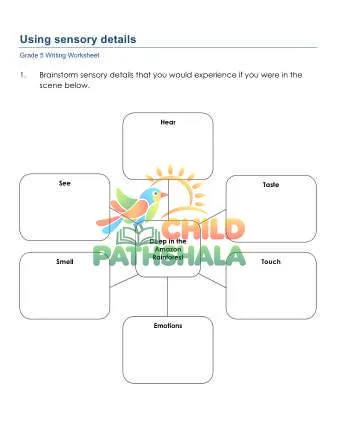
activitiesartlearningphonicsscience
Watch Science in action
▶ Now playing: Child Pathshala Printables
📺 Dedicated Watch Page →Parent favorites from the store
View all →
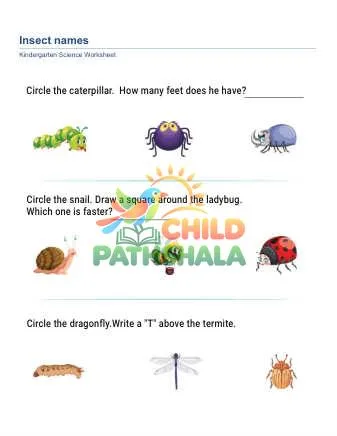
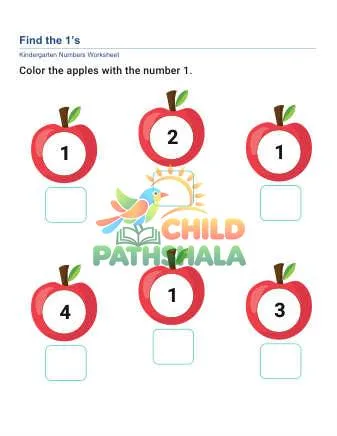
Apply during checkout for instant savings. Shop all bundles →
Looking for Printable Worksheets & Words?
Turn today's ideas into practice — 14,900+ free worksheets by grade, subject and skill, plus an illustrated 30,000-word dictionary.
Keep reading
 Science
Kindergarten Letter Sounds Activities: Auditory Discrimination and Phonics Drills
Anand Kumar
 Science
Grade 6 Social Science Syllabus and Topics: Ancient Civilizations, Geography, World Religions, and Early Governance
Anand Kumar
 Science
Grade 6 Force and Motion: Vector Forces, Acceleration Formulas, Kinetic Friction, and Momentum
Anand Kumar
 Science
Animals Worksheets: Classifying Mammals, Birds, Reptiles, Amphibians, Fish, and Insects
Anand Kumar
Get New Learning Activities & Printables
One short email a week — no spam, unsubscribe anytime.