Home › Blog › Preschool › How to Create a Daily Learning Routine for Preschoolers That
How to Create a Daily Learning Routine for Preschoolers That Actually Sticks
When parents decide to establish a home learning routine for their three- or four-year-old, they often start by designing a strict hourly schedule: 9:00 AM Math.


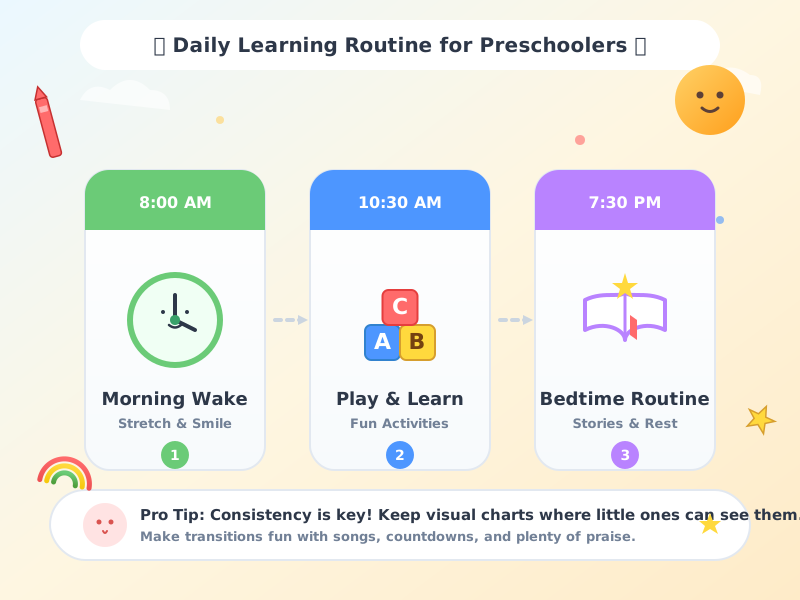
The Myth of the Rigid Preschool Timetable
When parents decide to establish a home learning routine for their three- or four-year-old, they often start by designing a strict hourly schedule: 9:00 AM Math, 9:30 AM Phonics, 10:00 AM Art.
By Day Three, this rigid schedule usually collapses into tears, frustration, and power struggles.


Young children do not experience time through clock minutes. They understand life through predictable rhythms and sequence anchors:
- "After breakfast, we put on our painting shirts."
- "After outdoor park time, we cuddle with storybooks."
- "After quiet rest time, we build with blocks."
A successful preschool routine is not a rigid school bell schedule; it is an intuitive alternating flow between high-energy movement and calm, focused exploration. When children know what sequence comes next, their nervous system relaxes, reducing behavioral resistance and opening the door to deep curiosity.
When setting up our home study corner, we set out a full box of 48 crayons. Within five minutes, thirty-six crayons were rolling across the floor and our preschooler was overwhelmed. Now, before any activity, we place exactly three crayons on the wooden tray. A clear desk creates a calm, focused mind.
Here is a practical, teacher-tested blueprint for creating a daily learning routine that works harmoniously for both parents and children.
The "Rhythm Over Schedule" Daily Framework
Instead of watching the clock, anchor your day around five natural sequence blocks:
| Daily Block | Energy State | Core Activities | Duration |
|---|---|---|---|
| 1. Morning Launch & Sensory Spark | High Curiosity | Breakfast, sensory bins, fine motor invitations, dough play | 30–45 mins |
| 2. Outdoor Exploration & Gross Motor | High Energy | Nature walks, playground climbing, chalk games, puddle jumps | 60–90 mins |
| 3. Tabletop Mini-Learning (Center Time) | Focused Calm | Short 10-minute counting games, storybooks, pre-writing art | 20–30 mins |
| 4. Afternoon Decompression & Quiet Time | Low Energy / Rest | Audiobooks, puzzle trays, independent quiet reading | 45–60 mins |
| 5. Family Living & Practical Chores | Collaborative | Dinner prep, sorting laundry socks, toy tidy-up song | 30–40 mins |
1. Designing the Morning "Invitation to Play"
The easiest way to start the day with focus is by setting out an invitation to play before your child wakes up:
- The Sensory Tray: A shallow tray of blue kinetic sand with plastic ocean animals.
- The Building Challenge: Ten wooden blocks beside a strip of blue painter's tape roadway.
- The Art Station: Stiff cardstock with three colors of dot markers and round stickers.
When a child wakes up to a visible, tactile invitation, their brain immediately engages in self-directed creative play, preventing early morning screen begging and setting a peaceful tone for the morning.
2. The 10-Minute Tabletop Learning Rule
When introducing structured concepts (counting, letter sounds, scissor practice), adhere to the 10-minute rule:
- Keep It Focused: A preschooler's sustained cognitive bandwidth for formal instruction is roughly 2 to 3 times their age in years (6 to 12 minutes for a 4-year-old).
- Pair with Concrete Manipulatives: Never teach counting with abstract worksheets alone; use wooden beads, acorns, or snack crackers.
- End While They Are Still Having Fun: Stop the tabletop activity when enthusiasm is peak, leaving your child eager to return to the table tomorrow!
3. Harnessing the Power of Visual Schedule Cards
Preschoolers cannot read written schedules, but they thrive when using visual picture cards:
- Take photographs or draw simple line icons representing daily milestones (Breakfast, Sensory Play, Park, Books, Nap, Tidy Up).
- Attach velcro dots to the back of each card and mount them in sequence on a low wall or refrigerator.
- Have your child move completed cards into a "Finished" pocket.
Visual schedules give children a sense of agency and control, drastically reducing transition tantrums because they can clearly see what happens next.
4. Managing Meltdowns During Routine Transitions
Transitions between activities (such as leaving the park or cleaning up toys) are prime triggers for emotional friction. Smooth these shifts using:
- The 5-Minute Verbal & Auditory Warning: Use a visual sand timer or sing a transition chime: "When the chime rings three times, we say goodbye to the swings and head home for apples!"
- The "Carry-Along" Bridge Object: Let your child carry a favorite pinecone or leaf from the park into the house to keep their focus grounded.
- A Tidy-Up Rhyme or Song: Sing a rhythmic clean-up song together rather than issuing sharp commands.
5 Practical Tips for Long-Term Routine Success
- Build in White Space: Leave large 30-minute buffers where nothing is planned. Unstructured downtime is where spontaneous imagination blooms.
- Honor Bad Days and Sickness: Routines should bend like bamboo during teething, illness, or poor sleep. Return gently to your rhythm when energy restores.
- Incorporate Real Household Chores: Let your child help chop bananas with a butter knife, wipe tables with small sponges, and water plants.
- Rotate Toys Bi-Weekly: Keeping half of your toys stored out of sight in a closet prevents sensory overwhelm and renews novelty.
- Protect Evening Bedtime Rhythms: Consistent evening routines (warm bath, dim lights, cozy story, lullaby) ensure restorative sleep for the next day's adventures.
3 Guiding Parent Reminders
- Connection Precedes Instruction: A five-minute cuddle and laugh on the couch creates the emotional security a child needs to learn.
- Consistency Beats Perfection: Practicing a simple 20-minute daily rhythm consistently for six months builds more capability than erratic three-hour sprints.
- Observe Your Child's Natural Peak Times: If your child is alert at 10:00 AM and sluggish at 2:00 PM, align your focused learning with their natural biological rhythm!
Frequently Asked Questions
Common questions from parents and educators answered by our specialists
Q1
How long should a preschooler spend on daily learning?
No more than 20 to 30 minutes of direct, sitting study. The rest of their learning should come naturally through play, chores, and conversation.
Q2
What if my child completely refuses to follow the schedule?
Abandon the clock and follow their bodily cues. Ensure they are well-fed and rested, then shorten the activity to five minutes until the habit forms.
📑 Practice Offline: Matching Printable Worksheets


gameslearningparentsplaypreschool
How to Create a Daily Learning Routine for Preschoolers
A daily learning routine is not a school timetable — it is a predictable rhythm: play, a tiny bit of practice, a story, and repetition tomorrow.
Watch Preschool in action
▶ Now playing: Chore Chart
📺 Dedicated Watch Page →Parent favorites from the store
View all →


Apply during checkout for instant savings. Shop all bundles →
Looking for Printable Worksheets & Words?
Turn today's ideas into practice — 14,900+ free worksheets by grade, subject and skill, plus an illustrated 30,000-word dictionary.
Keep reading
 Preschool
How to Teach Children Responsible Technology Use: Family Media Agreements, Digital Footprints, Self-Regulation, and Device Contracts
Anand Kumar
 Preschool
Preschool Sorting Activities for Children: Categorization, Logic, and Multi-Attribute Sets
Shalni Kumari
 Preschool
Preschool Practice Worksheets: Establishing Stress-Free Daily Learning Habits
Shalni Kumari
 Preschool
Grade 1 Word Problems With Solutions: Addition, Subtraction, and Multi-Step Scenarios
Shalni Kumari
Get New Learning Activities & Printables
One short email a week — no spam, unsubscribe anytime.