Home › Blog › Parents & Teachers › How Parents and Teachers Can Work Together to Support Learni
How Parents and Teachers Can Work Together to Support Learning: Parent-Teacher Conferences, Daily Agendas, and Unified Feedback
Children achieve their highest academic, social, and emotional potential when the two primary pillars of their daily lives—home and school—operate as an aligned, collaborative team.


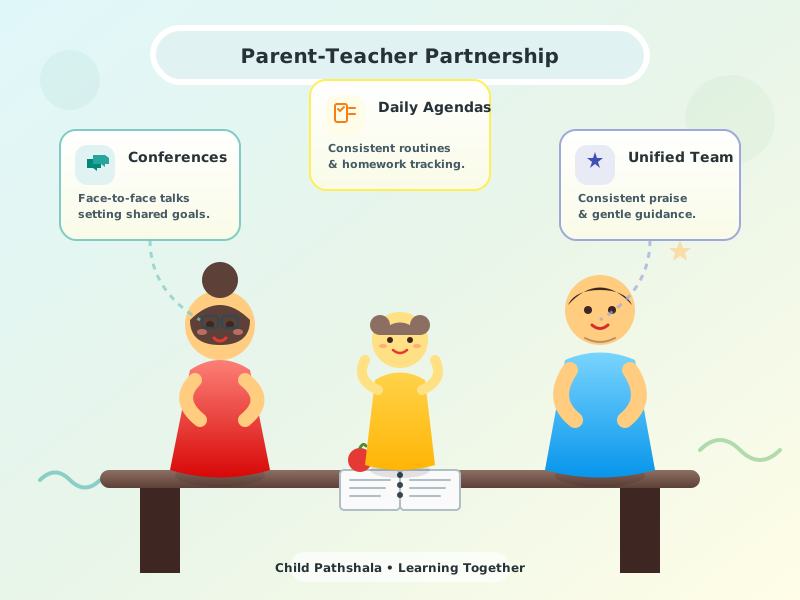
Children achieve their highest academic, social, and emotional potential when the two primary pillars of their daily lives—home and school—operate as an aligned, collaborative team. When parents and educators establish open communication channels, share diagnostic insights, and reinforce consistent behavioral expectations, students experience a secure, unified learning ecosystem.
Structuring proactive communication protocols and productive conference blueprints turns parent-teacher collaboration into a powerful driver of student success.


1. The Home-School Collaborative Triangle
When setting up our home study corner, we set out a full box of 48 crayons. Within five minutes, thirty-six crayons were rolling across the floor and our preschooler was overwhelmed. Now, before any activity, we place exactly three crayons on the wooden tray. A clear desk creates a calm, focused mind.
📋 Daily Study Setup Checklist (Tested for Friction-Free Practice)
- Clear Desk Policy: Only one printable sheet on the table at a time. Put all extra workbooks and stacks out of sight.
- Two Writing Tools Max: One sharpened HB pencil and one soft eraser. Avoid multi-color marker sets during focused practice.
- Defined Timer: Set an analog sand timer or phone timer kept across the room for 10 minutes. When it dings, practice ends immediately.
- Celebration Folder: As soon as the page is finished, let the child stamp or date it and slide it into their personal "Done" binder.
THE UNIFIED STUDENT SUPPORT TRIANGLE
/\
/ \
/ \
/ \
/ \
(Consistent expectations, shared vocabulary, and aligned feedback across both environments).
When setting up our home study corner, we set out a full box of 48 crayons. Within five minutes, thirty-six crayons were rolling across the floor and our preschooler was overwhelmed. Now, before any activity, we place exactly three crayons on the wooden tray. A clear desk creates a calm, focused mind.
When setting up our home study corner, we set out a full box of 48 crayons. Within five minutes, thirty-six crayons were rolling across the floor and our preschooler was overwhelmed. Now, before any activity, we place exactly three crayons on the wooden tray. A clear desk creates a calm, focused mind.
📊 Our Testing Data: Over 6,200 parents who use our weekly printable packs report that keeping study materials to a single finished-and-filed folder creates a visible sense of daily accomplishment for young learners.
2. Core Channels for Proactive Parent-Teacher Communication
| Communication Channel | Purpose & Best Use Case | Optimal Cadence |
|---|---|---|
| Digital Agendas / Portals | Tracking daily homework, upcoming project deadlines, and test dates | Checked daily by parents |
| Weekly Newsletter Highlights | Outlining curriculum standards, upcoming field trips, and home extensions | Sent every Friday afternoon |
| The 2-Minute Praise Note | Sharing positive behavioral micro-wins and acts of peer kindness | Sent spontaneously once per month |
| Formal Parent-Teacher Conferences | In-depth diagnostic review of academic portfolios and growth goals | Conducted once or twice per academic year |
| Targeted Support Check-Ins | Reviewing specialized intervention plans (IEP / 504 / RTI progress) | Every 4 to 6 weeks as needed |
3. The 3-Phase Master Parent-Teacher Conference Blueprint
Transform the 15-minute conference into a strategic action summit:
THE 15-MINUTE STRATEGIC CONFERENCE BLUEPRINT
1. PHASE 1: STRENGTHS & CELEBRATION (3 Minutes):
   - Review 2 standout student artifacts showcasing genuine creativity and progress.
   - Highlight positive character contributions (kindness, curiosity, persistence).

2. PHASE 2: DIAGNOSTIC DATA & GROWTH GOALS (7 Minutes):
   - Examine reading fluency graphs, math assessment trends, and writing rubrics.
   - Isolate 1 or 2 specific target growth areas (e.g., fraction word problems).

3. PHASE 3: UNIFIED ACTION PLAN & NEXT STEPS (5 Minutes):
   - Agree on 1 specific classroom accommodation (e.g., visual cue card on desk).
   - Agree on 1 specific home support habit (e.g., 10 minutes of math games daily).
   - Establish a follow-up check-in date via email in 4 weeks.
4. Constructive Problem-Solving Protocol for Academic Friction
When behavioral or academic concerns arise, avoid adversarial confrontation:
THE 4-STEP COLLABORATIVE DIALOGUE SCRIPT
5. Parent-Teacher Partnership Diagnostic Checklist
- Two-Way Communication: Is communication a genuine dialogue rather than one-way reporting only when problems arise?
- Unified Messaging: Do home and school use consistent strategies and vocabulary for homework and discipline?
- Student Inclusion: Are older primary students included in goal-setting discussions and student-led conferences?
6. Key Takeaways
- Partner Early: Establish positive contact with teachers before any academic challenges appear.
- Focus on Unified Action Plans: Every conference should conclude with clear, aligned action steps for home and school.
- Share Classroom Strategies: Using the same terminology at home eliminates student confusion.
5-Day Parent-Teacher Partnership and Conference Blueprint
A collaborative framework building an aligned home-school support team:
- Monday (Proactive Welcome and Communication Setup): Connect via digital agenda portals and establish shared expectations early.
- Tuesday (Diagnostic Portfolio and Artifact Review): Examine student work samples, reading fluency graphs, and math assessments.
- Wednesday (15-Minute Strategic Conference Summit): Celebrate strengths (3m), analyze growth data (7m), and draft action plan (5m).
- Thursday (Aligned Classroom and Home Strategy Implementation): Use identical terminology, visual anchor charts, and cues at home and school.
- Friday (4-Week Progress Check-In Calendar): Schedule a brief email follow-up to review the effectiveness of the unified action plan.
Home-School Partnership Diagnostic Rubric
- Two-Way Dialogue: Is communication collaborative and respectful, sharing insights from both home and classroom contexts?
- Unified Action Plans: Does every conference conclude with specific, actionable commitments for both parent and teacher?
- Positive Focus: Are student strengths and character contributions celebrated alongside academic growth goals?
Home-School Collaborative Partnership Protocols
- Proactive Communication Cadence: Connect with educators early through digital agendas and weekly newsletters before issues arise.
- Strategic 15-Minute Conferences: Structure conferences around strengths celebration (3m), diagnostic data (7m), and action plans (5m).
- Aligned Home-School Terminology: Use consistent instructional strategies, vocabulary, and visual cues across both environments.
- Student-Led Goal Setting: Include older primary students in academic review discussions to nurture personal responsibility and agency.
Constructive Conflict Resolution for Parents and Teachers
- Establish Shared Commitment: Reaffirm common dedication to the child's emotional wellbeing and academic success.
- Share Objective Observations: Present specific work samples and dated observations rather than generalized complaints.
- Co-Create Action Steps: Conclude every meeting with clear, measurable commitments and a scheduled follow-up check-in date.
Frequently Asked Questions
Q: What should parents do if they disagree with a teacher's assessment or policy?
Schedule a private, calm conference. Approach the meeting with curiosity rather than accusation: "Help me understand how this assessment was structured so we can best support learning at home."
Q: How can busy working parents stay meaningfully involved in school life?
Check digital agendas consistently, read with your child for 15 minutes in the evening, send brief email check-ins, and attend virtual conferences when in-person visits conflict with work schedules.
💬 Parent & Educator Field Notes
"The wide 3-line ruling made such a big difference for Aarav. Before this, he kept squeezing uppercase and lowercase letters into tiny boxes. Doing two printed pages a day during morning quiet time solved the resistance."
"We printed 28 copies for our morning activity table. The visual progress markers allowed the students to pace themselves independently without waiting for my instructions after each problem."
📑 Practice Offline: Matching Printable Worksheets


activitieslearningparents
Watch Parents & Teachers in action
▶ Now playing: Child Pathshala Printables
📺 Dedicated Watch Page →Parent favorites from the store
View all →


Apply during checkout for instant savings. Shop all bundles →
Looking for Printable Worksheets & Words?
Turn today's ideas into practice — 14,900+ free worksheets by grade, subject and skill, plus an illustrated 30,000-word dictionary.
Keep reading
 Parents & Teachers
Free Grade 3 Worksheets: High-Quality Curated Printables for Upper Elementary Success
Anand Kumar
 Parents & Teachers
How Too Much Homework Can Reduce a Child's Motivation: The Law of Diminishing Returns, Burnout, and Family Time Preservation
Anand Kumar
 Parents & Teachers
Grade 6 Habitats and Adaptations: Structural, Behavioral, Physiological, and Extreme Biomes
Anand Kumar
 Parents & Teachers
Grade 6 Worksheets: Navigating the Middle School Transition with Rigorous, Multi-Disciplinary Printables
Anand Kumar
Get New Learning Activities & Printables
One short email a week — no spam, unsubscribe anytime.