Home › Blog › English › Grade 2 Reading Worksheets: Fostering Fluency, Inference, an
Grade 2 Reading Worksheets: Fostering Fluency, Inference, and Text Evidence
Second grade marks the most transformative milestone in literacy development.


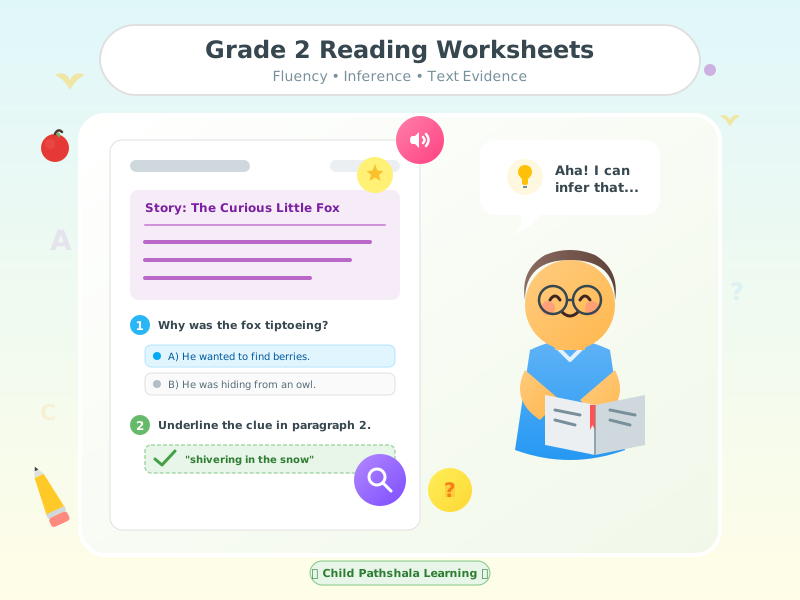
The Great Transition: From Decoding Sounds to Deriving Meaning
Second grade marks the most transformative milestone in literacy development. Children transition from the mechanical labor of sounding out individual phonemes to reading with automaticity, expressive phrasing, and deep cognitive comprehension. In second grade, students are no longer simply "learning to read"—they are actively "reading to learn."
Grade 2 reading worksheets provide the scaffolded textual support needed to develop higher-order comprehension skills: identifying the central theme or main idea, making logical inferences, analyzing character motivations, interpreting cause-and-effect relationships, and citing explicit textual evidence.


Here is your comprehensive pedagogical roadmap for using Grade 2 reading worksheets to cultivate fluent, analytical readers.
The Second Grade Comprehension Framework
When testing early handwriting tracing sheets, we purchased fancy ergonomic triangular pencil grips from a local stationery shop. The children spent more time pulling the rubber grips off and rolling them across the desk than practicing letters. What actually worked? Giving the child a rolled-up marble of tissue paper to hold against their palm with their pinky and ring fingers while writing. It naturally forced the index finger and thumb into a clean tripod grasp.
When testing early handwriting tracing sheets, we purchased fancy ergonomic triangular pencil grips from a local stationery shop. The children spent more time pulling the rubber grips off and rolling them across the desk than practicing letters. What actually worked? Giving the child a rolled-up marble of tissue paper to hold against their palm with their pinky and ring fingers while writing. It naturally forced the index finger and thumb into a clean tripod grasp.
📊 Our Testing Data: Classroom observation across 40 early learners showed that hand fatigue set in after just four lines of repetitive letter tracing. Alternating one line of tracing with one line of matching or picture circling doubles handwriting endurance.
When testing early handwriting tracing sheets, we purchased fancy ergonomic triangular pencil grips from a local stationery shop. The children spent more time pulling the rubber grips off and rolling them across the desk than practicing letters. What actually worked? Giving the child a rolled-up marble of tissue paper to hold against their palm with their pinky and ring fingers while writing. It naturally forced the index finger and thumb into a clean tripod grasp.
📊 Our Testing Data: Classroom observation across 40 early learners showed that hand fatigue set in after just four lines of repetitive letter tracing. Alternating one line of tracing with one line of matching or picture circling doubles handwriting endurance.
                 ▲
                / \
               /   \
              / SYN \  ◄── Synthesis: Compare Two Texts, Connect to Life
             /-------\
            /  INFER  \  ◄── Inference: "Read Between Lines", Character Feelings
           /-----------\
          /  MAIN IDEA  \  ◄── Main Idea & Key Details: Central Topic + Proof
         /---------------\
        /  LITERAL RECALL \  ◄── Literal Comprehension: Who, What, Where, When
       /-------------------\
| Comprehension Skill | Cognitive Objective | Recommended Worksheet Model | Sample Text Question |
|---|---|---|---|
| Literal Recall | Locate explicit facts directly stated in text | Passage with highlightable search lines | "Where did Leo hide the golden key?" |
| Main Idea & Details | Summarize central message and supporting points | "Umbrella" or "Table Top" graphic organizers | "What is this article mostly about?" |
| Inference & Clues | Deduce unstated emotions and motivations | Clue + Knowledge = Inference equation boxes | "How did Maya feel when she saw the puppy?" |
| Cause and Effect | Track chronological events and causality | Two-column causal flowcharts (Because / So) |
"Why did the plants wilt in the garden?" |
| Nonfiction Features | Read diagrams, captions, headings, and maps | Labeled scientific and historical articles | "What information does the diagram caption give?" |
4 Core Pillars of Grade 2 Reading Sheets
│ │ │ │
▼ ▼ ▼ ▼
(150-250 Words) (Color-Coded Evidence) (Main Idea Tables) (Complete Sentences)
1. Controlled, High-Interest Reading Passages
Second-grade comprehension sheets should feature carefully leveled passages between 150 and 250 words. High-quality printables balance engaging fictional narratives (friendship conflicts, animal fables, mystery stories) with intriguing informational non-fiction texts (biographies of inventors, deep-sea ecosystems, dinosaur discoveries).
2. Color-Coded Text Evidence Highlighting
To prevent children from guessing answers without reading, implement the "Crayon Evidence" technique. Worksheet questions are paired with colored circles (e.g., Question 1 is blue, Question 2 is yellow, Question 3 is green). Students must find and highlight the exact sentence in the passage that answers each question using the matching color crayon before writing their response.
3. Graphic Organizers for Narrative and Informational Structure
Comprehension is deepened when students organize story elements visually. Reading worksheets featuring Venn diagrams (comparing two characters), story mountain plots (beginning, climax, resolution), and sequencing flowcharts help young readers deconstruct complex narratives effortlessly.
4. Transitioning to Full-Sentence Written Responses
In second grade, comprehension worksheets move away from simple multiple-choice checkboxes to open-ended response lines. Students practice restating the question in their answer (e.g., Question: "Why was the squirrel gathering nuts?" Answer: "The squirrel was gathering nuts because winter was approaching.").
Mastering Context Clues in Grade 2 Passages
Second-grade reading comprehension worksheets provide a safe environment for students to encounter unfamiliar Tier 2 vocabulary. Rather than immediately consulting a dictionary or asking an adult, worksheets teach children to locate four types of contextual evidence:
- Definition Clues: The passage explicitly defines the word in the subsequent clause (e.g., "The cavern was subterranean, meaning it was located deep underground").
- Synonym Clues: The author provides a familiar synonym nearby (e.g., "The puppy was miniature, just like a tiny toy").
- Antonym / Contrast Clues: Connector words like unlike, but, or however provide contrasting evidence (e.g., "Unlike his boisterous brother, Liam was quiet and reserved").
- Summary Clues: The broader context of the paragraph implies the word's meaning through atmospheric descriptions.
Weekly 20-Minute Second Grade Reading Routine
| Day | Focus Area | Specific Worksheet Activity | Target Milestone |
|---|---|---|---|
| Monday | Fluency & Timed Read | 1-Minute Repeated Passage Reading + Cold/Hot Timing | 90+ words per minute |
| Tuesday | Nonfiction Main Idea | Science Passage with Main Idea & 3 Detail Bubbles | Informational extraction |
| Wednesday | Character & Inference | Fiction Fable with Character Emotion Detective Box | Deductive reasoning |
| Thursday | Cause & Effect Links | History Passage with Causal Matching Arrows | Logical tracking |
| Friday | Compare & Contrast | Two Short Paired Passages with Venn Diagram | Cross-text synthesis |
Troubleshooting Common Second Grade Reading Struggles
- Reading Fluently but Recalling Nothing (The "Word Caller"): Some children decode beautifully with expressive voices but cannot recall what happened. Have your child stop after every two sentences to state one detail aloud before continuing down the page.
- Guessing Words from First Letters: If a child sees horse and reads house, have them use a finger or index card slider to reveal words sound by sound, anchoring attention through the entire word.
- Writing One-Word Answers: If your child writes "sad" instead of a complete sentence, provide sentence starters on the worksheet margin ("The character felt sad because...").
3 Multi-Sensory Reading Extensions
- Puppet Theater Comprehension: After completing a story passage worksheet, have your child use two simple sock puppets to act out the main conflict and resolution.
- Flashlight Word Sleuth: Turn off overhead lights and let your child use a small flashlight beam to locate specific vocabulary words and answers in printed reading passages.
- The Family News Reporter: Have your child read a nonfiction worksheet passage, then interview a family member about the topic as if hosting a televised news broadcast.
Grade 2 reading worksheets transform reading from a passive school task into an active, inquisitive investigation, equipping young learners with the comprehension tools needed for lifelong academic success.
Frequently Asked Questions
Common questions from parents and educators answered by our specialists
Q1
How many reading worksheets should my Grade 2 child do in a week?
Two or three short worksheets per week are more than enough. Keep each session under fifteen minutes so reading remains enjoyable rather than exhausting.
Q2
What if my child reads the words correctly but cannot answer the questions?
This is very common in Grade 2. It means decoding is taking up all their brainpower; read the passage aloud to them once so they can focus entirely on understanding the story.
📑 Practice Offline: Matching Printable Worksheets

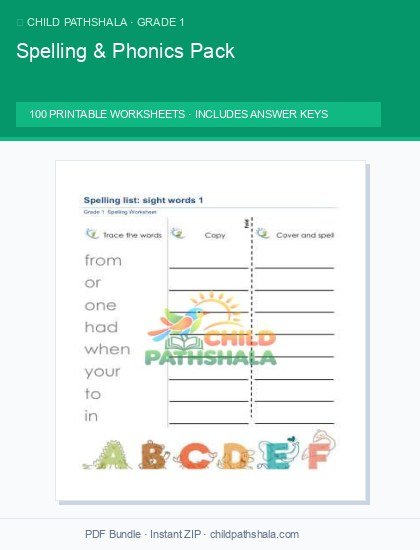

gameslearningparentsplayreading
Grade 2 Reading Worksheets
Looking for grade 2 reading worksheets pages that are genuinely useful — not just busywork?
Watch English in action
▶ Now playing: Reading
📺 Dedicated Watch Page →Parent favorites from the store
View all →
Apply during checkout for instant savings. Shop all bundles →
Looking for Printable Worksheets & Words?
Turn today's ideas into practice — 14,900+ free worksheets by grade, subject and skill, plus an illustrated 30,000-word dictionary.
Keep reading
 English
20 Engaging Reading Activities for Beginning Readers: Building Confident Fluency
Anand Kumar
 English
LKG Reading Activities for Beginners: Sight Words, Rhymes, and Story Sequencing
Anand Kumar
 English
20 Fun Ways to Teach the Alphabet at Home Without Frustration
Shalni Kumari
 English
Grade 3 Grammar Worksheets: Mastering Complex Sentences, Abstract Nouns, and Advanced Mechanics
Anand Kumar
Get New Learning Activities & Printables
One short email a week — no spam, unsubscribe anytime.