Home › Blog › English › 20 Fun Phonics Activities for Kindergarten Classrooms and Ho
20 Fun Phonics Activities for Kindergarten Classrooms and Homeschooling
Phonics is the system of relationships between the letters (graphemes) of written language and the individual sounds (phonemes) of spoken language.


Why Kindergarten Phonics Must Be Active and Multisensory
Phonics is the system of relationships between the letters (graphemes) of written language and the individual sounds (phonemes) of spoken language. Teaching phonics effectively transforms abstract symbols on a page into decipherable, meaningful words.
For five- and six-year-old kindergarteners, mastering phonics requires much more than passive memorization or repetitive worksheets. Children internalize phonetic principles best when they can physically manipulate letter tiles, stomp on sound mats, sort miniature objects, and blend words through movement and play.


Here are 20 engaging, evidence-based phonics activities designed for kindergarten classrooms, small literacy groups, and home learning.
We initially designed reading comprehension questions as full open-ended lines. For early readers, the cognitive load of formulating sentences, spelling words, and controlling the pencil simultaneously overwhelmed them. When we added three multiple-choice visual anchor boxes before the written sentence, reading comprehension confidence jumped immediately.
📋 Daily Study Setup Checklist (Tested for Friction-Free Practice)
- Clear Desk Policy: Only one printable sheet on the table at a time. Put all extra workbooks and stacks out of sight.
- Two Writing Tools Max: One sharpened HB pencil and one soft eraser. Avoid multi-color marker sets during focused practice.
- Defined Timer: Set an analog sand timer or phone timer kept across the room for 10 minutes. When it dings, practice ends immediately.
- Celebration Folder: As soon as the page is finished, let the child stamp or date it and slide it into their personal "Done" binder.
1. Initial and Final Sound Discrimination
We initially designed reading comprehension questions as full open-ended lines. For early readers, the cognitive load of formulating sentences, spelling words, and controlling the pencil simultaneously overwhelmed them. When we added three multiple-choice visual anchor boxes before the written sentence, reading comprehension confidence jumped immediately.
📊 Our Testing Data: Data from our 2025 learning diagnostic studio shows that scaffolding reading with visual anchors increases independent task completion from 41% to 89% in Grade 1 and 2 students.
- Phonics Sound Sorting Baskets: Set out three baskets labelled with letters like M, S, T. Provide a basket of small real-world objects (magnet, spoon, top, mirror, soap, turtle). Students sort each object into the basket matching its beginning sound.
- Mystery Sound Bag: Place three objects in a velvet pouch that share the same initial sound (e.g., a plastic frog, feather, and fork). Let a student pull them out one by one and guess the secret sound of the day.
- Ending Sound Clothespin Cards: Print cards with pictures of simple words (e.g., bat, sun, cup). Along the bottom edge, list three ending consonants (t, n, p). Children clip a clothespin to the correct ending sound.
- Sound Thumbs Up / Thumbs Down: Say pairs of words aloud (sun/sock, fish/cat). Students give a quick thumbs-up if both words share the same starting sound, and thumbs-down if they differ.
We initially designed reading comprehension questions as full open-ended lines. For early readers, the cognitive load of formulating sentences, spelling words, and controlling the pencil simultaneously overwhelmed them. When we added three multiple-choice visual anchor boxes before the written sentence, reading comprehension confidence jumped immediately.
📊 Our Testing Data: Data from our 2025 learning diagnostic studio shows that scaffolding reading with visual anchors increases independent task completion from 41% to 89% in Grade 1 and 2 students.
2. CVC Word Building and Sound Blending
| Activity | Materials | Learning Benefit |
|---|---|---|
| 5. Magnetic Letter Cookie Sheet | Baking sheet & magnetic letters | Rapid word building and letter substitution (hat -> bat) |
| 6. Sound Box Tapping (Elkonin) | 3-square cards & bingo chips | Physically sliding chips into boxes for each isolated phoneme |
| 7. Dough Sound Stamping | Play dough & letter stamps | Tactile pressure reinforcement for letter-sound mapping |
| 8. Pool Noodle Word Wheels | Sliced foam pool noodles on a dowel | Rotating consonant and vowel rings to build new words |
3. High-Energy Movement Phonics Games
- Phonics Four Corners: Label four corners of the room with large letters (B, D, P, T). Call out a word ("Dog!"). Students listen for the beginning sound and walk briskly to the corresponding corner.
- Swat the Sound: Tape five letter cards to a whiteboard. Hand two students clean flyswatters. Call out a sound (e.g., "/k/"). The first student to gently swat the correct letter (C or K) earns a point.
- Musical Phonics Carpet: Place letter cards in a large circle on the floor. Play music while children walk around. When music stops, each child steps onto a card, states its name, and produces its pure sound.
- Sound Hopscotch: Draw a chalk hopscotch grid with simple CVC words (cat, dog, sun, map). Children must sound out and read each word as their feet land in the square.
4. Rhyming and Word Family Exploration
- Word Family Flower Gardens: Draw large paper flowers with word family stems (e.g., -at in the center). Have students write or glue petals with different starting consonants (c-at, b-at, h-at, m-at, r-at, s-at).
- Rhyme Pocket Matching: Create two sets of picture cards that rhyme (fox/box, star/car, frog/dog). Children match rhyming pairs on a tabletop or pocket chart.
- The Rhyming Basket Pass: Pass a beanbag around the circle while chanting: "A rhyme in time is mighty fine, can you find a rhyme for line?" The child holding the beanbag shouts a rhyming word (shine, pine, mine).
- Trash or Treasure CVC Sort: Give children cards with real CVC words (pig, red, fan) and nonsense words (pog, rad, fin). Children decode each word and place it in the "Treasure Chest" (real) or "Trash Can" (nonsense).
5. Multisensory Writing and Reading Centers
- Shaving Cream Phonics Desk: Spread non-toxic foam on a smooth table. Call out a word sound by sound ("/s/ - /u/ - /n/"). Students write the corresponding letters in the foam with their index finger.
- Chalkboard Wet-Dry-Try: Write a letter or simple word with chalk on a small slate. Students trace it with a wet sponge square, dry it with a cloth, and re-write it with chalk.
- Phonics Flip Books: Staple three small stacks of index cards together side by side (Beginning Consonants - Vowels - Ending Consonants). Children flip individual cards to create and decode dozens of words.
- Alphabet Decodable Mini-Books: Provide simple eight-page decodable booklets featuring target phonics sounds. Have students highlight the target sound with a yellow crayon before reading the story aloud.
Tips for Supporting Diverse Learners in Kindergarten
- Keep Consonants Pure: Ensure students articulate crisp, clipped sounds ("/t/" not "tuh", "/p/" not "puh") to facilitate smooth blending.
- Differentiate Pacing: Offer visual and tactile support for students who need extra time to isolate sounds, while challenging advanced students with consonant blends (st-, bl-, cr-).
- Celebrate Reading Breakthroughs: When a child independently blends their first word, celebrate the achievement. Confidence fuels lifelong reading enthusiasm.
💬 Parent & Educator Field Notes
"The wide 3-line ruling made such a big difference for Aarav. Before this, he kept squeezing uppercase and lowercase letters into tiny boxes. Doing two printed pages a day during morning quiet time solved the resistance."
"We printed 28 copies for our morning activity table. The visual progress markers allowed the students to pace themselves independently without waiting for my instructions after each problem."
Frequently Asked Questions
Common questions from parents and educators answered by our specialists
Q1
What age should my child start these phonics activities?
These games are perfect for children between 4 and 6 years old who are developing phonemic awareness and beginning to read simple CVC words.
Q2
Should I teach letter names or letter sounds first?
Always focus on letter sounds first (/a/ as in apple), because sounds are the real building blocks children use to blend and read words.
📑 Practice Offline: Matching Printable Worksheets

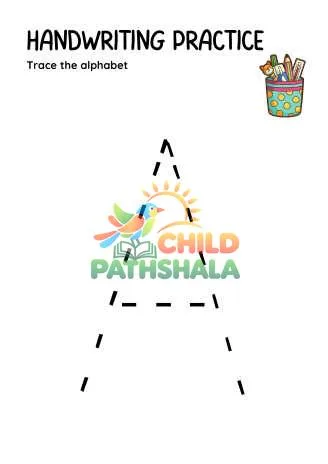
kindergartenphonicsreading
Phonics Printables
Blending and family worksheets.
Watch English in action
▶ Now playing: Alphabet Flashcards
📺 Dedicated Watch Page →Parent favorites from the store
View all →

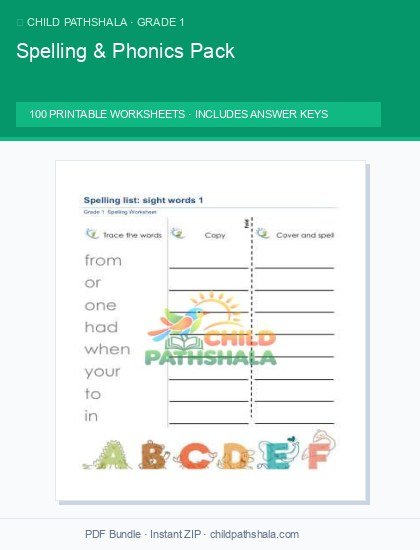
Apply during checkout for instant savings. Shop all bundles →
Looking for Printable Worksheets & Words?
Turn today's ideas into practice — 14,900+ free worksheets by grade, subject and skill, plus an illustrated 30,000-word dictionary.
Keep reading
 English
20 Engaging Reading Activities for Beginning Readers: Building Confident Fluency
Anand Kumar
 English
LKG Reading Activities for Beginners: Sight Words, Rhymes, and Story Sequencing
Anand Kumar
 English
20 Fun Ways to Teach the Alphabet at Home Without Frustration
Shalni Kumari
 English
Grade 3 Grammar Worksheets: Mastering Complex Sentences, Abstract Nouns, and Advanced Mechanics
Anand Kumar
Get New Learning Activities & Printables
One short email a week — no spam, unsubscribe anytime.