Home › Blog › Science › Five Senses Worksheets: Exploring Sight, Hearing, Smell, Tas
Five Senses Worksheets: Exploring Sight, Hearing, Smell, Taste, and Touch in Early Science
Human beings explore and understand the world through five specialized biological channels: Sight (Eyes), Hearing (Ears), Smell (Nose), Taste (Tongue), and Touch (Skin).


The Sensory Gateway to Scientific Observation
Human beings explore and understand the world through five specialized biological channels: Sight (Eyes), Hearing (Ears), Smell (Nose), Taste (Tongue), and Touch (Skin). For young learners in preschool and kindergarten, studying the five senses is the foundational starting point for all future scientific inquiry. Before children can measure temperature with a thermometer or record data on a chart, they must learn to observe textures, distinguish aromas, identify sound frequencies, and recognize color patterns.
Five senses worksheets provide structured categorization activities that teach children to identify sensory organs, connect physical stimuli with sensory perceptions, and expand their descriptive vocabulary with rich sensory adjectives.


THE 5 SENSORY OBSERVATION GATEWAYS
Colors/Shapes Loud/Quiet Sweet/Smoky Sweet/Sour/Salty Soft/Rough/Hot
When setting up our home study corner, we set out a full box of 48 crayons. Within five minutes, thirty-six crayons were rolling across the floor and our preschooler was overwhelmed. Now, before any activity, we place exactly three crayons on the wooden tray. A clear desk creates a calm, focused mind.
The Master 5 Senses Taxonomy
| Sensory Organ | Primary Sense | Descriptive Sensory Words |
|---|---|---|
| Eyes | Sight (Vision) | bright, dim, crimson, striped |
| Ears | Hearing (Auditory) | deafening, whisper, squeaky |
| Nose | Smell (Olfactory) | fragrant, pungent, spicy |
| Tongue | Taste (Gustatory) | sweet, sour, salty, bitter |
| Skin | Touch (Tactile) | prickly, velvety, freezing |
4 Structured Five Senses Worksheet Formats
1. 5-Column Sensory Sorting Mats
Students cut out fifteen illustrated picture cards and sort them into five columns based on which primary sense is used to experience them:
- Sight: Rainbow, fireworks, starry sky
- Hearing: Alarm clock, musical trumpet, thunder
- Smell: Rose flower, fresh pizza, campfire smoke
- Taste: Lemon slice, chocolate ice cream, salty pretzel
- Touch: Fluffy rabbit, prickly cactus, smooth ice cube
| SIGHT | HEARING | SMELL | TASTE | TOUCH |
|---|---|---|---|---|
| Rainbow | Bell | Perfume | Apple | Velvet |
| Book | Drum | Onion | Candy | Sandpaper |
2. Multi-Sensory Object Analysis Webs
Students examine a single everyday object (such as a popcorn kernel or an apple) and record observations for all five senses:
- What does it look like? (Fluffy, white, yellow)
- What does it sound like when cooking? (Pop, crackle, sizzle)
- What does it smell like? (Buttery, warm, savory)
- What does it taste like? (Salty, crunchy, rich)
- What does it feel like? (Bumpy, light, warm)
3. "Which Sense Protects Us?" Safety Worksheets
Students identify how our senses warn us of danger:
- Hearing: Smoke alarm beeping, car horn honking
- Smell: Burnt food in oven, gas leak
- Sight: Red traffic light, stop sign
- Touch: Hot stove burner, sharp broken glass
4. Five Senses Nature Walk Scavenger Logs
A printable checklist where children take a clipboard outdoors and record two real-world items for each sense during a neighborhood walk.
Step-by-Step 15-Minute Daily Five Senses Routine
- Sensory Mystery Box Warm-Up (3 Minutes): Reach into an opaque fabric bag; describe an object using only touch ("bumpy, hard, cold") before guessing.
- Organ-to-Sense Whiteboard Review (3 Minutes): Point to facial features; students name the scientific sense ("Tongue = Taste!").
- Target Worksheet Execution (7 Minutes): Students independently complete their sensory sorting or object analysis web.
- Partner Sensory Showcase (2 Minutes): Students share their descriptive words with an elbow partner.
Diagnostic Tips for Common Sensory Misconceptions
- Thinking the mouth is the sense organ rather than the tongue:
- Intervention: Clarify that the tongue contains microscopic taste buds that taste sweet, salty, sour, bitter, and savory umami flavors.
- Thinking touch is only in the hands:
- Intervention: Explain that skin covers our entire body from head to toe, allowing our elbows, feet, and back to feel cold breezes or soft blankets!
Detailed Sensory Organ Physiology for Elementary Science
Teaching the biological mechanics behind the five senses enriches early science inquiry:
| Sense | Sensory Organ | Receptor Mechanism | Primary Environmental Function |
|---|---|---|---|
| Sight | Eyes (Retina) | Light photoreceptors (rods/cones) | Detects colors, shapes, movement, distance |
| Hearing | Ears (Cochlea) | Sound wave vibrations on eardrum | Detects volume, pitch, speech, rhythm |
| Smell | Nose (Olfactory) | Airborne odor molecules | Detects aromas, hazards (smoke/gas), food |
| Taste | Tongue (Papillae) | Taste bud chemical receptors | Differentiates sweet, sour, salty, bitter, umami |
| Touch | Skin (Dermis) | Nerve endings (thermo/mechano) | Detects temperature, pressure, pain, texture |
Hands-On Multi-Sensory Classroom Stations
- Station 1 (Mystery Scent Jars): Opaque jars containing cotton balls soaked in peppermint, vanilla, lemon, or cinnamon. Students sniff without looking and record their deductions on observation sheets.
- Station 2 (Sound Shaker Match): Opaque plastic eggs filled with rice, beans, paperclips, or sand. Students shake pairs to find matching auditory sounds.
- Station 3 (Texture Feely Bags): Reach into cloth bags to feel velvet, sandpaper, bubble wrap, or cold river stones, describing textures with sensory adjectives.
Five Senses Observation and Descriptive Vocabulary Rubric
Evaluate student sensory inquiry using this four-tier assessment framework:
- Level 1 (Beginning): Identifies external sense organs (eyes, ears, nose) but struggles to link internal sensory perceptions to specific descriptive adjectives.
- Level 2 (Developing): Accurately sorts objects by single primary senses; occasionally confuses the role of the tongue and nose in tasting food.
- Level 3 (Proficient): Uses rich sensory vocabulary (fragrant, pungent, velvety, deafening) and articulates how multiple senses work together.
- Level 4 (Advanced): Evaluates how the nervous system coordinates sensory input, analyzes sensory adaptations in animals, and explains how senses alert us to danger.
Frequently Asked Questions
Common questions from parents and educators answered by our specialists
Q1
At what age should I introduce five senses worksheets?
Start around age 3 with tactile games and simple single-sense coloring sheets, then move to full sorting and matching pages by ages 4 to 6.
Q2
How do I help a child who mixes up taste and smell on worksheets?
Pinch your nose together while eating a slice of apple or banana to show how smell creates flavor, then praise their insight instead of marking it wrong.
📑 Practice Offline: Matching Printable Worksheets


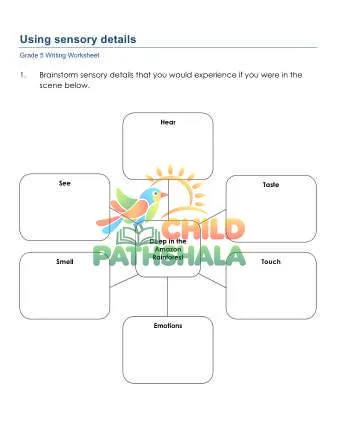
gameslearningparentsplayscience
Five Senses Worksheets
Looking for five senses worksheets pages that are genuinely useful — not just busywork?
Watch Science in action
▶ Now playing: Child Pathshala Printables
📺 Dedicated Watch Page →Parent favorites from the store
View all →
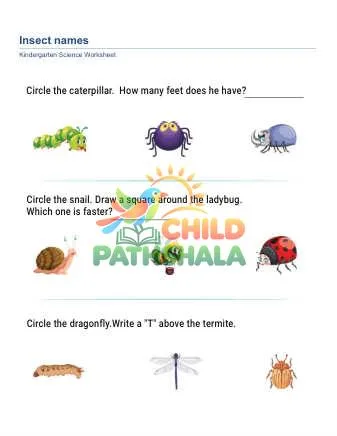
Apply during checkout for instant savings. Shop all bundles →
Looking for Printable Worksheets & Words?
Turn today's ideas into practice — 14,900+ free worksheets by grade, subject and skill, plus an illustrated 30,000-word dictionary.
Keep reading
 Science
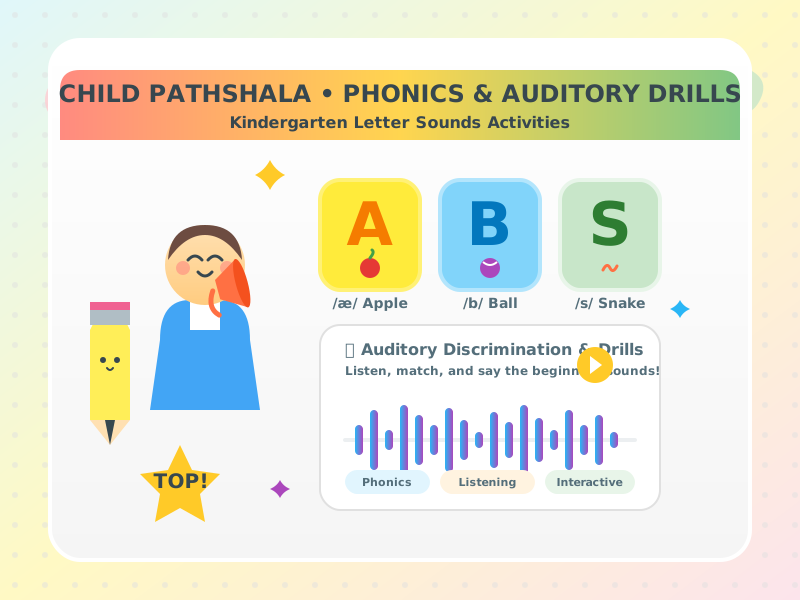
Kindergarten Letter Sounds Activities: Auditory Discrimination and Phonics Drills
Anand Kumar
 Science
Grade 6 Social Science Syllabus and Topics: Ancient Civilizations, Geography, World Religions, and Early Governance
Anand Kumar
 Science
Grade 6 Force and Motion: Vector Forces, Acceleration Formulas, Kinetic Friction, and Momentum
Anand Kumar
 Science
Animals Worksheets: Classifying Mammals, Birds, Reptiles, Amphibians, Fish, and Insects
Anand Kumar
Get New Learning Activities & Printables
One short email a week — no spam, unsubscribe anytime.