Home › Blog › Science › 20 Easy Science Experiments for Kids at Home: Safe Kitchen S
20 Easy Science Experiments for Kids at Home: Safe Kitchen STEM
Children are born with an insatiable scientific curiosity.


Children are born with an insatiable scientific curiosity. They constantly ask why the sky is blue, wonder what makes bubbles round, test how high water splashes, and want to know where rain comes from.
Science at home is not about memorizing complex chemical formulas or buying expensive laboratory equipment. It is about nurturing this natural curiosity—teaching children how to observe carefully, ask questions, form hypotheses, and test their ideas with everyday household materials.
With simple kitchen staples like baking soda, vinegar, cooking oil, dish soap, and food coloring, you can turn your kitchen table into a thrilling discovery lab.


Here are 20 easy, safe, and engaging science experiments you can enjoy with your children at home.
Chemical Reactions and Gas Generation
We tried scheduling study time for a rigid 4:00 PM slot right after school. It resulted in constant resistance because the child had spent six hours sitting still and needed physical movement first. Moving practice to twenty minutes after an outdoor park play session transformed the mood completely.
📋 Daily Study Setup Checklist (Tested for Friction-Free Practice)
- Clear Desk Policy: Only one printable sheet on the table at a time. Put all extra workbooks and stacks out of sight.
- Two Writing Tools Max: One sharpened HB pencil and one soft eraser. Avoid multi-color marker sets during focused practice.
- Defined Timer: Set an analog sand timer or phone timer kept across the room for 10 minutes. When it dings, practice ends immediately.
- Celebration Folder: As soon as the page is finished, let the child stamp or date it and slide it into their personal "Done" binder.
Visual, bubbling reactions provide exciting proof that mixing substances can create entirely new states of matter.
We tried scheduling study time for a rigid 4:00 PM slot right after school. It resulted in constant resistance because the child had spent six hours sitting still and needed physical movement first. Moving practice to twenty minutes after an outdoor park play session transformed the mood completely.
📊 Our Testing Data: Parent feedback from our community showed that pairing paper practice with a tangible physical habit — like checking off a daily sticker milestone — increased consistent study streaks from 4 days to 23 consecutive days.
1. Classic Baking Soda and Vinegar Eruption
We tried scheduling study time for a rigid 4:00 PM slot right after school. It resulted in constant resistance because the child had spent six hours sitting still and needed physical movement first. Moving practice to twenty minutes after an outdoor park play session transformed the mood completely.
📊 Our Testing Data: Parent feedback from our community showed that pairing paper practice with a tangible physical habit — like checking off a daily sticker milestone — increased consistent study streaks from 4 days to 23 consecutive days.
Place two tablespoons of baking soda in a small plastic bottle or cup. Add a squirt of liquid dish soap and red food coloring.
- Let your child pour in a small cup of vinegar.
- Watch bubbly carbon dioxide foam erupt over the rim, explaining that an acid (vinegar) and a base (baking soda) react to produce gas bubbles.
2. The Self-Inflating Balloon
Pour two inches of vinegar into an empty plastic water bottle.
- Use a funnel to fill an uninflated balloon with two teaspoons of baking soda.
- Stretch the balloon neck over the bottle opening without dumping the powder.
- When ready, lift the balloon upright so the baking soda drops into the vinegar. The carbon dioxide gas expands and inflates the balloon automatically.
3. Dancing Raisins in Carbonated Soda
Drop four or five dry raisins into a tall clear glass of sparkling water or clear soda.
- Carbon dioxide bubbles attach to the wrinkly surface of the raisins, lifting them to the top like tiny life preservers.
- When bubbles pop at the surface, the raisins sink back down, creating a continuous dancing cycle.
4. Magic Milk Surface Tension Swirls
Pour whole milk into a shallow plate and add four drops of different food colorings near the center.
- Dip a cotton swab into liquid dish soap and touch it to the center of the milk.
- Soap molecules instantly bond with the fat molecules in the milk, sending lively ribbons of color swirling across the plate.
5. Salt and Ice Melting Race
Place two identical ice cubes in separate bowls. Sprinkle a teaspoon of table salt over one cube and leave the other bare.
- Watch which cube melts faster, introducing how salt lowers the freezing point of water.
Physics, Motion, and Fluid Density
Exploring invisible forces like gravity, friction, and fluid density grounds physical science in tangible experiences.
6. Four-Layer Kitchen Density Tower
Pour honey, liquid dish soap, water tinted blue, and vegetable oil slowly into a tall clear glass.
- Because each liquid possesses a different density, they settle into distinct horizontal layers.
- Drop in a metal bolt, a grape, a plastic Lego brick, and a piece of foam to see which layer supports each object.
7. Balloon Rocket on a String
Thread a drinking straw onto a long string taped taut between two chairs across the room.
- Inflate a balloon (do not knot it) and tape it securely to the straw.
- Release the balloon opening: escaping air propels the balloon zooming across the room through Newton's third law of motion.
8. Cardboard Ramp Friction Test
Prop a long piece of cardboard against a chair to create an incline.
- Roll a toy car down the bare cardboard and measure its distance.
- Cover the ramp with a fluffy towel, a sheet of foil, and bubble wrap, observing how surface texture creates friction that slows motion.
9. Walking Water Capillary Lab
Line up five clear cups. Fill cups 1, 3, and 5 with water tinted red, yellow, and blue. Leave cups 2 and 4 empty.
- Fold paper towel strips to bridge each cup.
- Over several hours, water climbs through capillary action, mixing in the empty cups to create orange and green.
10. Static Electricity Butterfly
Cut delicate butterfly wings out of tissue paper and glue only the center body to cardboard.
- Rub an inflated balloon against hair or a wool blanket to build static charge.
- Hold the balloon above the butterfly and watch its wings flutter upward.
Plant Biology and Nature Science
Observing living organisms teaches children patience, observation, and life cycle concepts.
11. Celery Capillary Action Straws
Place a fresh stalk of leafy celery in a glass of water heavily tinted with red or blue food coloring.
- Within 24 hours, colored water travels up the xylem tubes to tint the leaves.
- Cut the stalk crosswise to show the colored dots representing the plant's drinking straws.
12. Sprouting Bean in a Window Bag
Place a damp paper towel inside a clear ziploc bag with two dry kidney beans or chickpeas.
- Tape the sealed bag to a sunny window.
- Over the next week, your child can observe the seed coat split, the white root push downward, and the green sprout reach toward the sun.
13. The Great Seed Dissection
Soak large dry lima beans in water overnight to soften the outer shell.
- Have your child gently peel off the seed coat and split the bean halves apart.
- Use a magnifying glass to find the miniature baby plant (embryo) resting inside.
14. Regrowing Kitchen Scraps
Place the root stub of spring onions or a celery bunch in a shallow dish of water on the windowsill, observing fresh green shoots emerge within days.
15. Leaf Rubbing Vein Architecture
Collect varied fallen leaves on a walk.
- Place a leaf vein-side up under thin paper and rub with the side of an unwrapped crayon to reveal the branching nutrient veins.
Earth, Weather, and Water Cycles
Hands-on weather models help children understand atmospheric science and water states.
16. Cloud in a Shaving Foam Jar
Fill a glass jar three-quarters full with clean water and top with a cloud of white shaving foam.
- Use a dropper to drip blue food coloring onto the foam cloud.
- When the cloud becomes saturated, blue "rain" bursts through into the clear water below.
17. Water Cycle in a Sealed Bag
Draw a sun and cloud on a ziploc bag with a permanent marker. Pour two inches of blue-tinted water inside and seal tightly.
- Tape the bag to a sunny window.
- As the sun warms the water, it evaporates into invisible vapor, condenses on the sides as droplets, and "rains" back down.
18. Homemade Funnel Rain Gauge
Cut the top third off a plastic bottle, invert it into the base like a funnel, and mark centimeter lines up the side with a ruler. Place it outside on a rainy day to measure precipitation.
19. Soil Filtration Test
Line three plastic funnels with coffee filters, filling one with sand, one with garden soil, and one with pebbles.
- Pour equal amounts of muddy water through each funnel into collection cups to compare which material filters cleanest.
20. Ice, Water, and Steam States of Matter
Place an ice cube in a small saucepan. Heat gently while your child watches from a safe distance:
- Observe the solid ice melt to liquid water, and then watch the liquid boil into rising steam vapor, illustrating the three states of matter.
Guiding Science at Home
- Ask guiding questions: Instead of explaining the outcome immediately, ask: "What do you think will happen when we mix these?" and "Why do you think that occurred?"
- Embrace unexpected results: If an experiment does not work as planned, treat it as a true scientific inquiry: "That was surprising! Let us look closely and test it again."
- Keep it hands-on: Letting children pour, mix, dropper, and measure builds deep confidence in their ability to explore and understand the natural world.
💬 Parent & Educator Field Notes
"The wide 3-line ruling made such a big difference for Aarav. Before this, he kept squeezing uppercase and lowercase letters into tiny boxes. Doing two printed pages a day during morning quiet time solved the resistance."
"We printed 28 copies for our morning activity table. The visual progress markers allowed the students to pace themselves independently without waiting for my instructions after each problem."
Frequently Asked Questions
Common questions from parents and educators answered by our specialists
Q1
What is the best age to start these simple home experiments?
Children as young as three enjoy the sensory magic, while six- and seven-year-olds can start predicting results and testing variations.
Q2
Do I need special safety goggles or equipment for these activities?
No, every experiment uses safe, non-toxic household staples like salt, turmeric, water, and food coloring with standard parental supervision.
📑 Practice Offline: Matching Printable Worksheets


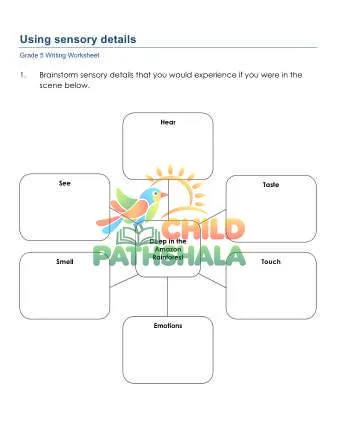
experimentsscience
Science On Paper
Observation and experiment worksheets.
Watch Science in action
▶ Now playing: Child Pathshala Printables
📺 Dedicated Watch Page →Parent favorites from the store
View all →
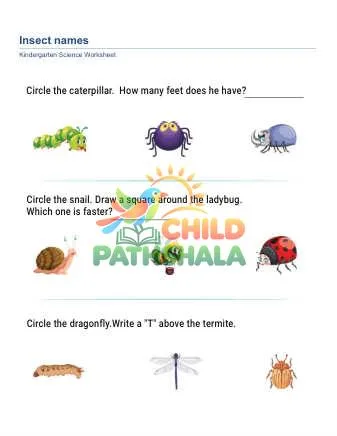
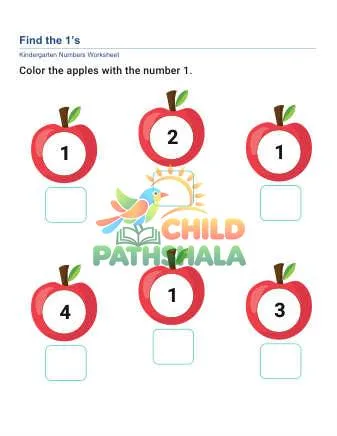
Apply during checkout for instant savings. Shop all bundles →
Looking for Printable Worksheets & Words?
Turn today's ideas into practice — 14,900+ free worksheets by grade, subject and skill, plus an illustrated 30,000-word dictionary.
Keep reading
 Science
Kindergarten Letter Sounds Activities: Auditory Discrimination and Phonics Drills
Anand Kumar
 Science
Grade 6 Social Science Syllabus and Topics: Ancient Civilizations, Geography, World Religions, and Early Governance
Anand Kumar
 Science
Grade 6 Force and Motion: Vector Forces, Acceleration Formulas, Kinetic Friction, and Momentum
Anand Kumar
 Science
Animals Worksheets: Classifying Mammals, Birds, Reptiles, Amphibians, Fish, and Insects
Anand Kumar
Get New Learning Activities & Printables
One short email a week — no spam, unsubscribe anytime.