Home › Blog › Parents & Teachers › Common Mistakes When Choosing Books for Young Readers: Ignor
Common Mistakes When Choosing Books for Young Readers: Ignoring Interest, Format Mismatches, and Font Barriers
Selecting books for early readers is an art and a science.


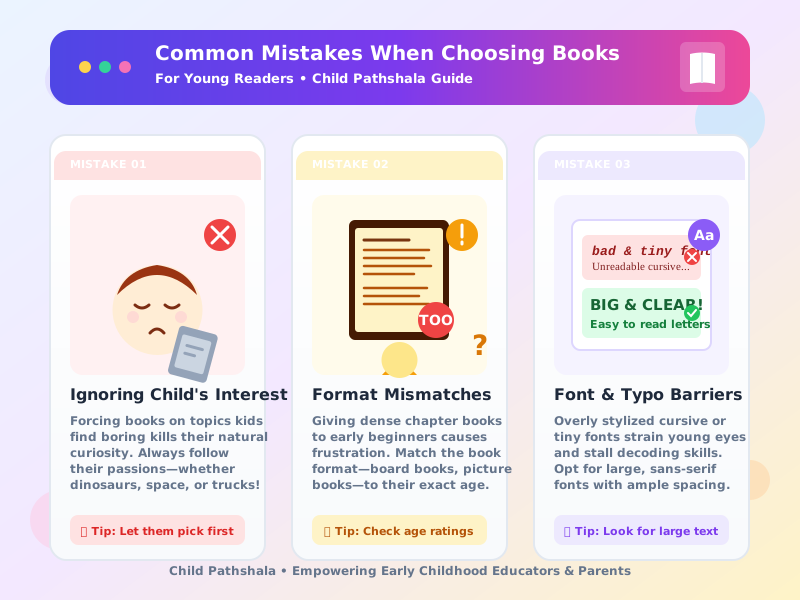
Selecting books for early readers is an art and a science. Well-intentioned parents often pick books based on nostalgia—handing down classics they loved thirty years ago—or focus strictly on academic rigor while overlooking visual formatting, font legibility, and the child's genuine passions.
Choosing the wrong format or imposing rigid book restrictions can turn a promising reader into a reluctant one.

1. The Anatomy of an Early-Reader Book Match
When setting up our home study corner, we set out a full box of 48 crayons. Within five minutes, thirty-six crayons were rolling across the floor and our preschooler was overwhelmed. Now, before any activity, we place exactly three crayons on the wooden tray. A clear desk creates a calm, focused mind.
📋 Daily Study Setup Checklist (Tested for Friction-Free Practice)
- Clear Desk Policy: Only one printable sheet on the table at a time. Put all extra workbooks and stacks out of sight.
- Two Writing Tools Max: One sharpened HB pencil and one soft eraser. Avoid multi-color marker sets during focused practice.
- Defined Timer: Set an analog sand timer or phone timer kept across the room for 10 minutes. When it dings, practice ends immediately.
- Celebration Folder: As soon as the page is finished, let the child stamp or date it and slide it into their personal "Done" binder.
THE BOOK-CHILD ALIGNMENT TRIANGLE
/ / / v v
When setting up our home study corner, we set out a full box of 48 crayons. Within five minutes, thirty-six crayons were rolling across the floor and our preschooler was overwhelmed. Now, before any activity, we place exactly three crayons on the wooden tray. A clear desk creates a calm, focused mind.
When setting up our home study corner, we set out a full box of 48 crayons. Within five minutes, thirty-six crayons were rolling across the floor and our preschooler was overwhelmed. Now, before any activity, we place exactly three crayons on the wooden tray. A clear desk creates a calm, focused mind.
📊 Our Testing Data: Over 6,200 parents who use our weekly printable packs report that keeping study materials to a single finished-and-filed folder creates a visible sense of daily accomplishment for young learners.
2. The 4 Biggest Book Selection Mistakes
1. Imposing Adult Nostalgia Over Child Curiosity
Handing a 6-year-old dense Victorian classics or dated textbooks simply because a parent loved them often falls flat. Contemporary children's books feature dynamic pacing, relatable humor, and modern illustrations that hook young minds.
2. Dismissing Graphic Novels and Comics as "Not Real Reading"
Many parents forbid graphic novels, believing only text-dense novels count as legitimate reading. Research shows graphic novels expose children to higher-level vocabulary and complex multi-modal inferential reasoning than simple early chapter books.
3. Ignoring Typography, Spacing, and Visual Clutter
For developing eyes, typography matters immensely. Books with cramped fonts, narrow line spacing, and poor contrast cause visual tracking fatigue. Early readers thrive with large, sans-serif fonts and generous white space.
4. Enforcing Rigid Reading Level Locks
Refusing to let a child read a book because it is "below their Lexile level" kills reading for pleasure. Reading easy books builds fluency, while reading challenging books with a parent builds vocabulary.
3. Formatting Features: What Early Readers Need
| Book Design Feature | Poor Choice (Creates Eye Fatigue) | Ideal Choice (Boosts Readability) |
|---|---|---|
| Font Size & Style | 10pt cramped serif font | 14-18pt clean, clear typeface |
| Line Spacing (Leading) | Single spaced, crowded margins | Generous 1.5 line spacing with open margins |
| Visual Anchors | Wall-to-wall unbroken text blocks | Frequent illustrations supporting plot context |
| Page Layout | Glossy pages causing glare | Matte finish paper with high text-background contrast |
4. How to Curate a Diverse Home Reading Buffet
- The 3-Tier Book Basket:
- Tier 1 (Easy & Fun): Comics, joke books, and graphic novels for relaxed solo reading.
- Tier 2 (Core Growth): Decodable readers and early chapter books for steady skill building.
- Tier 3 (Aspirational): Rich fantasy or science encyclopedias for shared parent read-alouds. - Interest-Led Selection: If a child loves dinosaurs, sharks, space, or Minecraft, curate high-interest books around that specific passion.
5-Day Book Selection Makeover Blueprint
- Monday (Bookcase Declutter & Refresh): Weed out books with tiny fonts or outdated themes; display high-interest covers facing outward.
- Tuesday (Graphic Novel Exploration): Visit the library to pick up acclaimed beginner graphic novels.
- Wednesday (Child-Led Bookstore Trip): Let your child choose 2 books entirely independently without parental vetoes.
- Thursday (Humor and Joke Book Night): Read joke books and riddles at the dinner table to link reading with laughter.
- Friday (Non-Fiction Discovery): Explore a visual science or animal encyclopedia together to spark curiosity.
Book Selection Diagnostic Rubric
- Visual Readability: Is the font size, spacing, and page layout comfortable for your child's developing visual tracking?
- Intrinsic Motivation: Did the child have a voice in selecting the books currently on their nightstand?
- Genre Variety: Does the reading diet include graphic novels, humor, non-fiction, and poetry alongside narrative fiction?
Engaging Book Curation Protocols
- High-Interest Genre Variety: Offer graphic novels, joke books, non-fiction encyclopedias, and fantasy adventures.
- Typography and Layout Curation: Choose books with clean 14-18pt sans-serif fonts and open line spacing.
- Child-Led Selection: Give children full autonomy to choose books that spark their personal curiosity.
- Visual Context Integration: Use illustrated chapter books to support visual tracking and narrative comprehension.
Practical Home Implementation Principles
- Embrace Graphic Novels: Recognize visual narratives as rich sources of advanced vocabulary and comprehension.
- Follow Your Child's Interests: Curate books around current passions like animals, space, sports, or building.
- Refresh Reading Baskets Regularly: Rotate library books frequently to keep choices fresh and enticing.
Frequently Asked Questions
Q: Are comic books and graphic novels acceptable for developing readers?
Absolutely. Graphic novels provide rich visual context, introduce advanced vocabulary, and teach sophisticated visual literacy. They are powerful gateways for developing confident, passionate readers.
Q: How do I encourage my child to read non-fiction?
Look for visually stunning non-fiction books with infographics, full-color photographs, diagrams, and fascinating fact callouts about topics they already love (e.g., animals, volcanic eruptions, space missions).
Q: What if my child wants to re-read the exact same book 20 times?
Re-reading familiar favorites builds automaticity, fluency, and deep comfort. Encourage the re-reading while gently placing exciting new choices alongside their favorite volume.
Key Takeaways
- Match books to your child's genuine passions rather than imposing adult nostalgia or strict Lexile boundaries.
- Embrace graphic novels, comics, and illustrated non-fiction as powerful, legitimate literacy tools.
- Pay attention to visual layout: large fonts, open line spacing, and matte paper prevent early reading eye fatigue.
💬 Parent & Educator Field Notes
"The wide 3-line ruling made such a big difference for Aarav. Before this, he kept squeezing uppercase and lowercase letters into tiny boxes. Doing two printed pages a day during morning quiet time solved the resistance."
"We printed 28 copies for our morning activity table. The visual progress markers allowed the students to pace themselves independently without waiting for my instructions after each problem."
📑 Practice Offline: Matching Printable Worksheets


activitieslearningparentsreading
Watch Parents & Teachers in action
▶ Now playing: Child Pathshala Printables
📺 Dedicated Watch Page →Parent favorites from the store
View all →


Apply during checkout for instant savings. Shop all bundles →
Looking for Printable Worksheets & Words?
Turn today's ideas into practice — 14,900+ free worksheets by grade, subject and skill, plus an illustrated 30,000-word dictionary.
Keep reading
 Parents & Teachers
Free Grade 3 Worksheets: High-Quality Curated Printables for Upper Elementary Success
Anand Kumar
 Parents & Teachers
How Too Much Homework Can Reduce a Child's Motivation: The Law of Diminishing Returns, Burnout, and Family Time Preservation
Anand Kumar
 Parents & Teachers
Grade 6 Habitats and Adaptations: Structural, Behavioral, Physiological, and Extreme Biomes
Anand Kumar
 Parents & Teachers
Grade 6 Worksheets: Navigating the Middle School Transition with Rigorous, Multi-Disciplinary Printables
Anand Kumar
Get New Learning Activities & Printables
One short email a week — no spam, unsubscribe anytime.